A source-informed practical guide. Examples explain decisions and arithmetic; they are not claims of a kitchen trial by this publication.
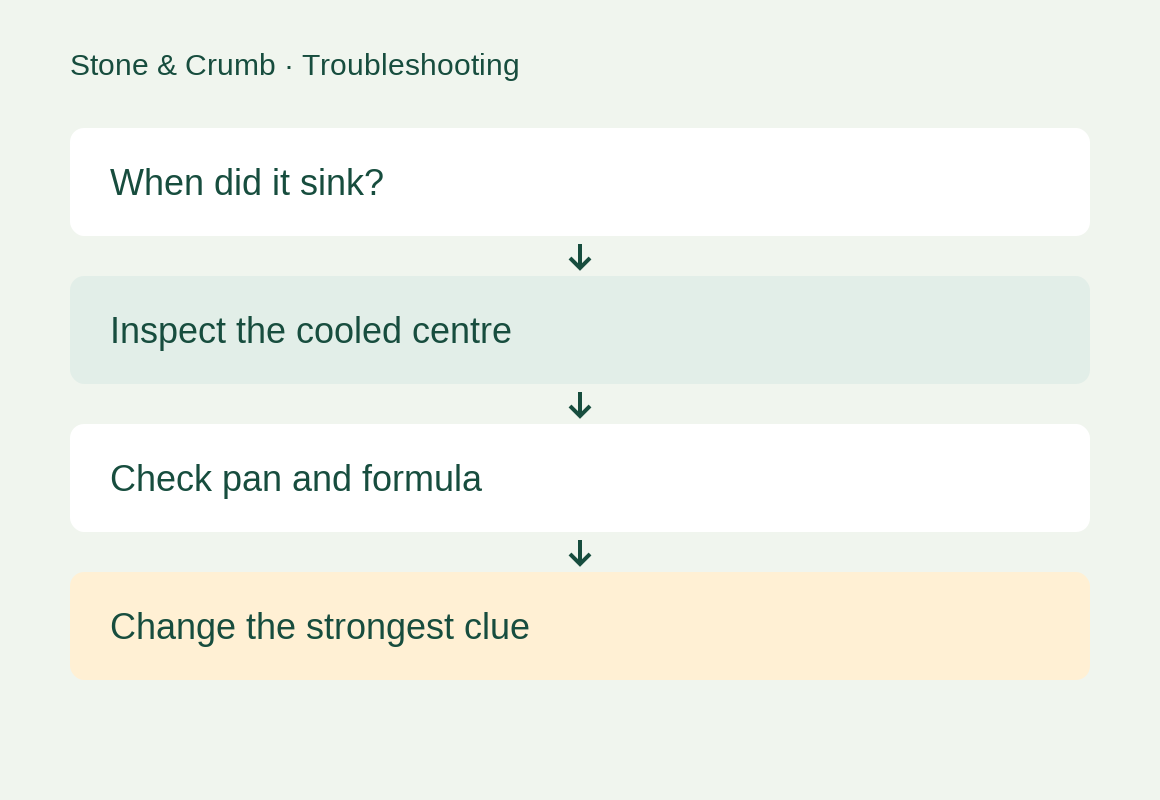
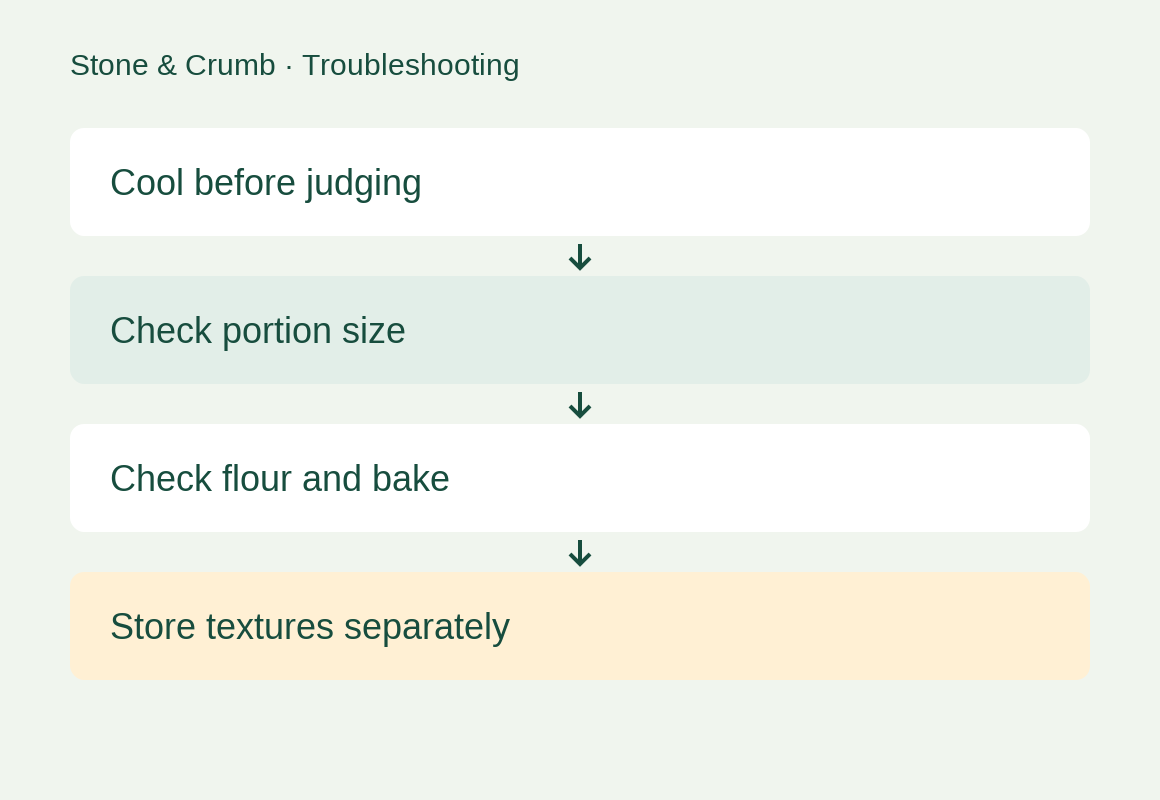
First decide whether the cookie is meant to be crisp, chewy or soft. A shortbread and a soft drop cookie do not share the same target. Then judge the batch after cooling: a hot cookie can seem soft even when it will become very firm. The diagnosis begins with the intended style and the first fully cooled sample.
Did the dough already seem unusually dry?
Review flour measurement and substitutions. A packed cup, extra bench flour or repeated dusting during rolling can change the balance. Compare your quantities with the recipe's weight column when provided. Check whether a liquid ingredient or part of an egg was missed during scaling.
Do not pour in milk without a reason. If the mixture is simply cold from its required rest, it may need the handling method described by the recipe rather than extra liquid. If the formula cannot be reconstructed, make the next batch accurately before redesigning it.
Did smaller cookies bake for the original time?
A smaller portion or a thinner rolled sheet may finish earlier. Keep thickness consistent and bake similar sizes together. If edges are already deeply browned while the centre no longer matches the recipe's cue, waiting for the timer can push the texture further than intended.
Use the recipe's finishing description for that style. Do not generalise “remove while raw” as a way to obtain softness. Follow proper baking directions, then allow the recommended period on the tray before transferring so the cookie can be handled without breaking.
Did the texture change overnight?
Cool completely before packaging. Store different textures separately, since a crisp biscuit and a moist soft cookie affect each other in a shared container. Check the recipe's storage guidance, particularly for fillings or toppings requiring refrigeration. A sealed box does not make every filling suitable for room-temperature storage.
Record when the texture changed. Dry at the first cooled bite points toward formula or baking; acceptable on day one but hard later points you toward storage and the recipe's expected keeping quality. Those observations lead to different next attempts.
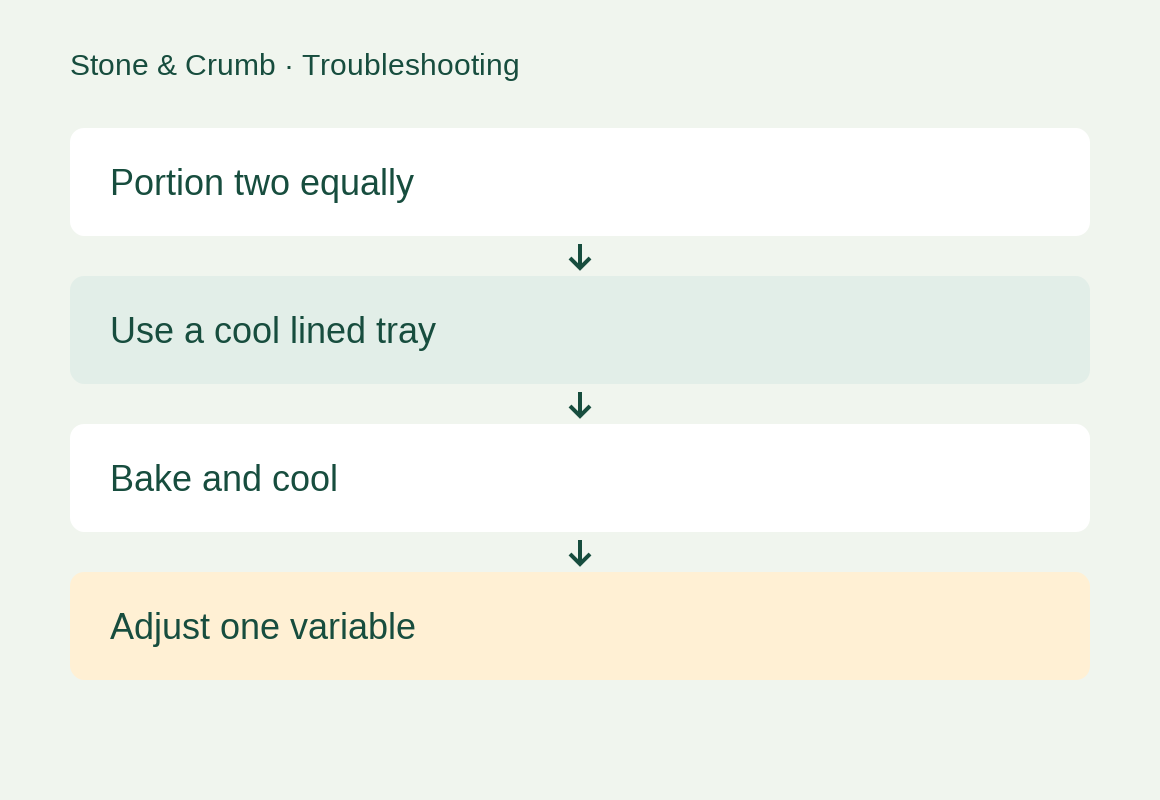
Pick one correction
If flour was uncertain, weigh it. If pieces were thin, restore the specified size and check at the appropriate time. If texture changed in a shared box, separate the styles. For the present batch, a fully baked, properly handled crisp cookie can sometimes become crumbs for another suitable preparation, but that does not reverse the underlying error. Repeat one small batch with a clear record rather than changing every ingredient at once.