A source-informed practical guide. Examples explain decisions and arithmetic; they are not claims of a kitchen trial by this publication.
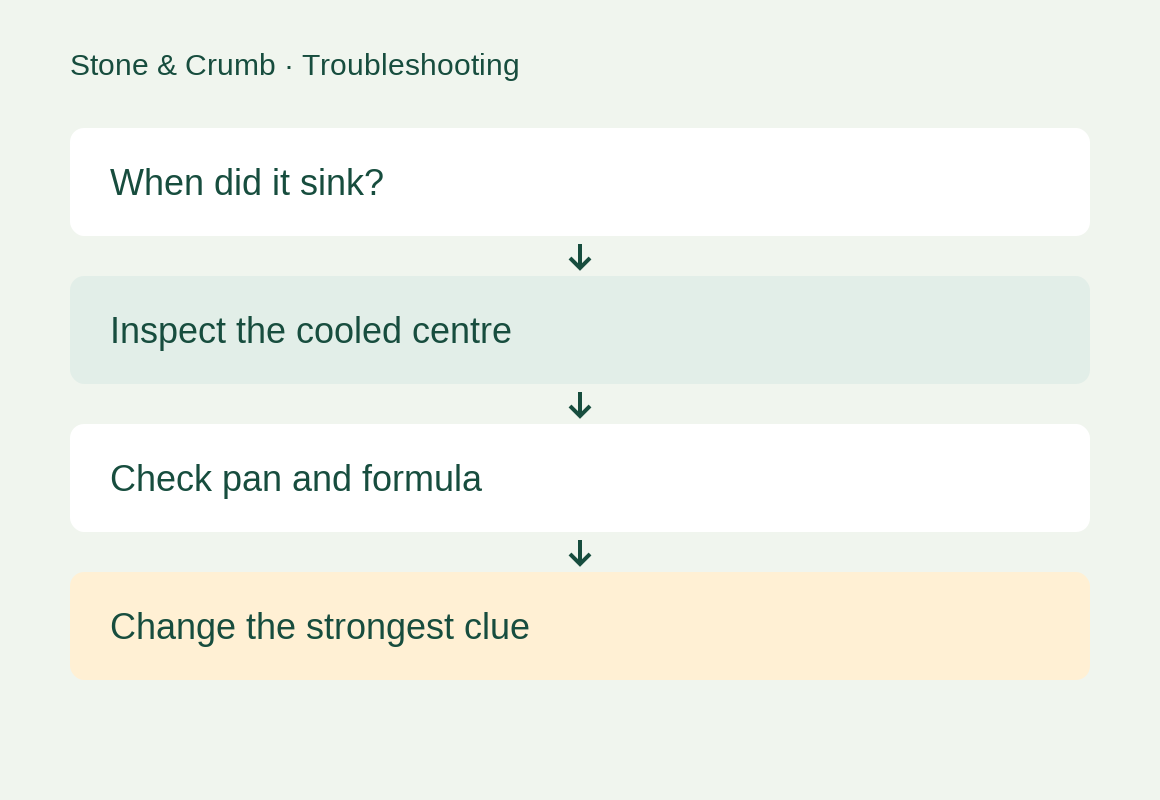
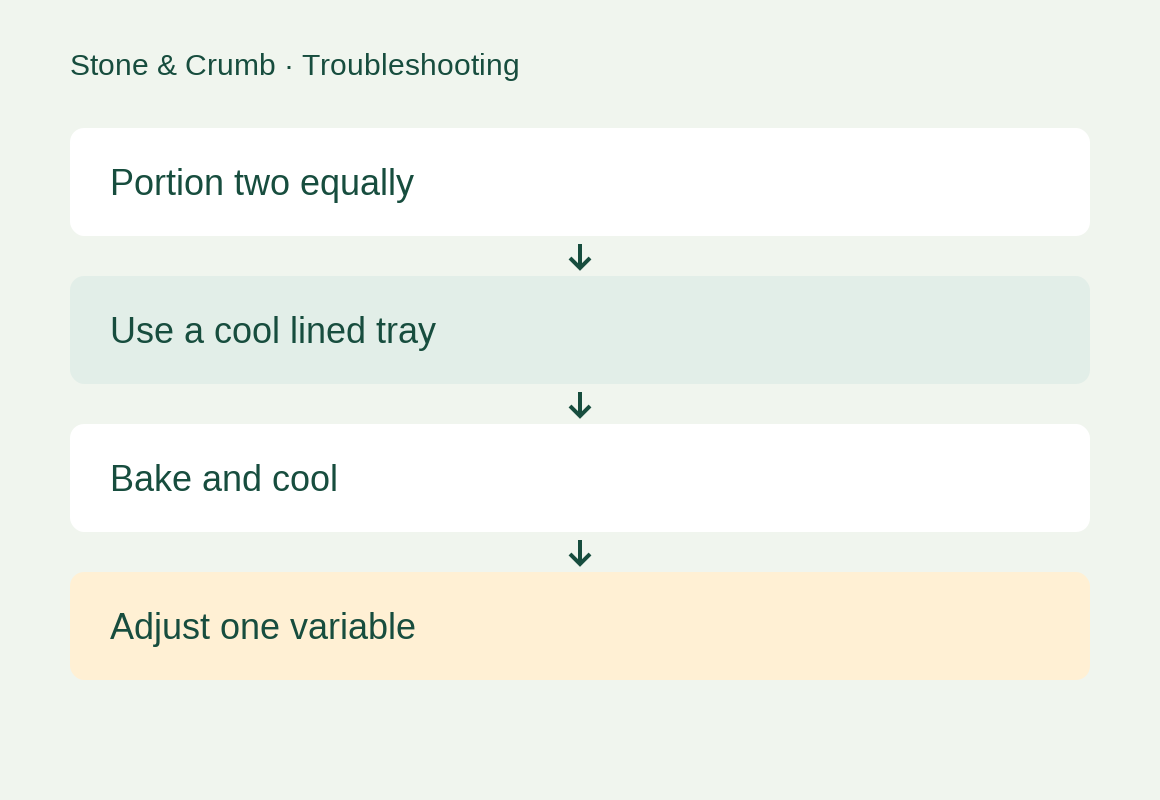
When cookies merge into a thin sheet, inspect the dough and setup before adding a handful of flour. Excess spread can come from several places: ingredient proportions, butter condition, omitted chilling or the baking surface. Baking two equal portions first gives you evidence while preserving most of the dough for a controlled change.
Reconstruct what went into the bowl
Check whether the flour was weighed, sugar or fat was substituted, or butter was melted when the recipe asked for softened butter. A spread labelled for toast may contain a different proportion of water from baking butter. Confirm the ingredient rather than assuming the same package weight makes it interchangeable.
If a known ingredient was omitted and you can still follow recipe-specific correction advice, address that known error. If you cannot reconstruct the quantities, acknowledge the uncertainty. Extra flour may reduce spread but also change tenderness and flavour; it is not a diagnosis.
Standardise a small test
Use a completely cooled sheet prepared as the recipe specifies. Make two equal-weight portions with adequate space between them. Keep the remaining raw dough under the storage conditions the recipe requires. Record portion mass, dough condition, liner and shelf position.
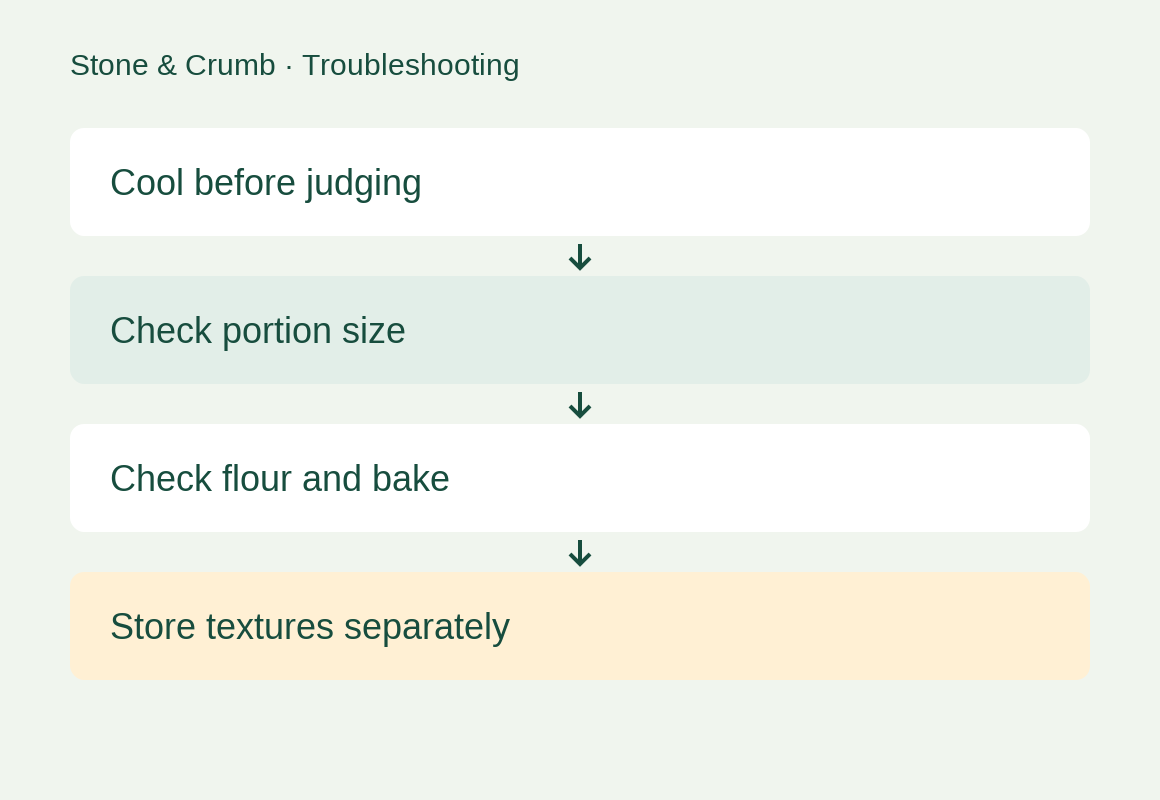
Bake and let the test cookies reach their normal cooled state before deciding. Some styles deliberately spread and set into thin cookies. Compare the result with the recipe's intended appearance and texture, not a photograph of an unrelated thick cookie.
Choose the most likely adjustment
If the recipe required chilling and the dough was baked warm, restore that step and repeat the same small test. If the sheet was hot from a previous batch, cool it fully. If flour quantity was uncertain, weigh accurately on the next fresh batch. Change one condition so the comparison remains useful.
Do not keep chilling indefinitely while ignoring a formula error. Cold fat can delay spread, but it cannot guarantee that any mixture will become the cookie you intended. The cookie chilling guide explains when a cold rest belongs to the method.
Keep a usable result
Write down cooled diameter and thickness alongside the conditions. If two test portions improve after restoring the prescribed chilling, bake the rest under the same conditions and portion size. If they do not, reassess ingredients and oven mode before committing a full tray. Raw dough is not ready to taste; a small fully baked sample is the useful comparison.