A source-informed practical guide. Examples explain decisions and arithmetic; they are not claims of a kitchen trial by this publication.
Choose a recipe that matches the equipment and time you actually have. A plain drop cookie or a simple oil-based cake usually involves fewer temperature-sensitive stages than laminated pastry or a decorated layer cake. Start with a published, tested recipe that gives ingredient weights, a specific pan and descriptions of the finished mixture. This page is a planning guide, not a new recipe tested in our kitchen.
Choose one manageable result
Write down what success means before buying ingredients: a cooked cake that releases cleanly, cookies with set edges, or a loaf that slices without a wet centre. Appearance alone is a poor first target. A recipe with unfamiliar ingredients, several fillings and an overnight rest creates many possible causes if something goes wrong. Save those challenges for separate sessions.
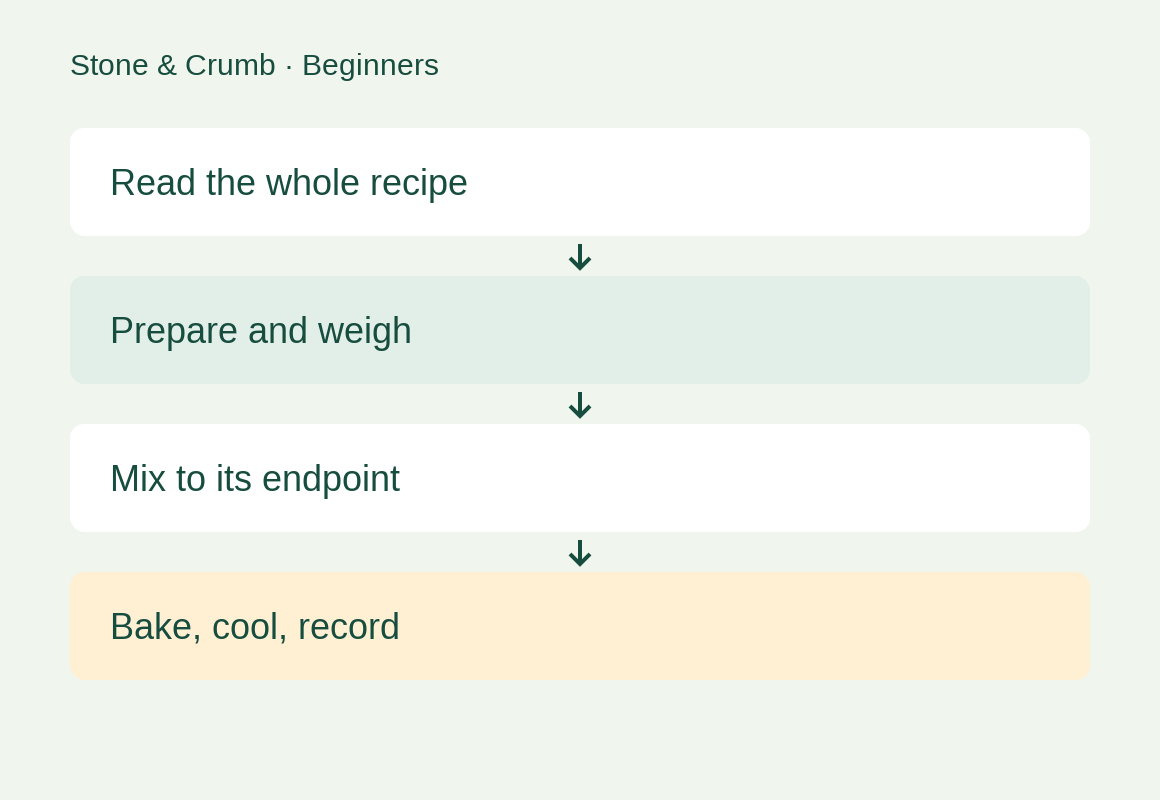
Read the method through to the cooling instructions. Count resting, preheating, chilling and cooling as part of the total time. A recipe with twenty minutes of mixing can still occupy most of an afternoon. Check whether the butter must be softened, the dough chilled or the pan lined before mixing begins.
Prepare a small working station
Set out a scale, bowls, spatula, required pan, oven gloves and a cooling rack. Compare the pan's internal dimensions with the recipe. Put ingredients beside their weights and tick each off after adding it. Keep the recipe visible without touching a phone with flour-covered hands. Move ready-to-eat food away from raw flour and eggs.
Use the specified ingredient on your first attempt. Changing flour, reducing sugar and replacing eggs together removes the reference point the recipe provides. If a required ingredient is unavailable, choose a different recipe designed for what you have. This is often easier than trying to repair several substitutions.
Follow a sequence rather than a stopwatch
Preheat on the correct oven mode and arrange shelves before the oven gets hot. Weigh ingredients before the time-sensitive mixing stage. Read each endpoint: fluffy butter, evenly moistened batter or dough that has visibly expanded. A mixing time describes the author's equipment; the described change tells you what to inspect.
Set an initial reminder before the recipe's earliest finishing time, but avoid repeatedly opening an unset cake. Observe through the window first. When the recipe's checking stage arrives, use its doneness cues together. Cool as instructed before cutting or decorating; warm structure can tear or compress even when baking was adequate.
Turn the result into a next step
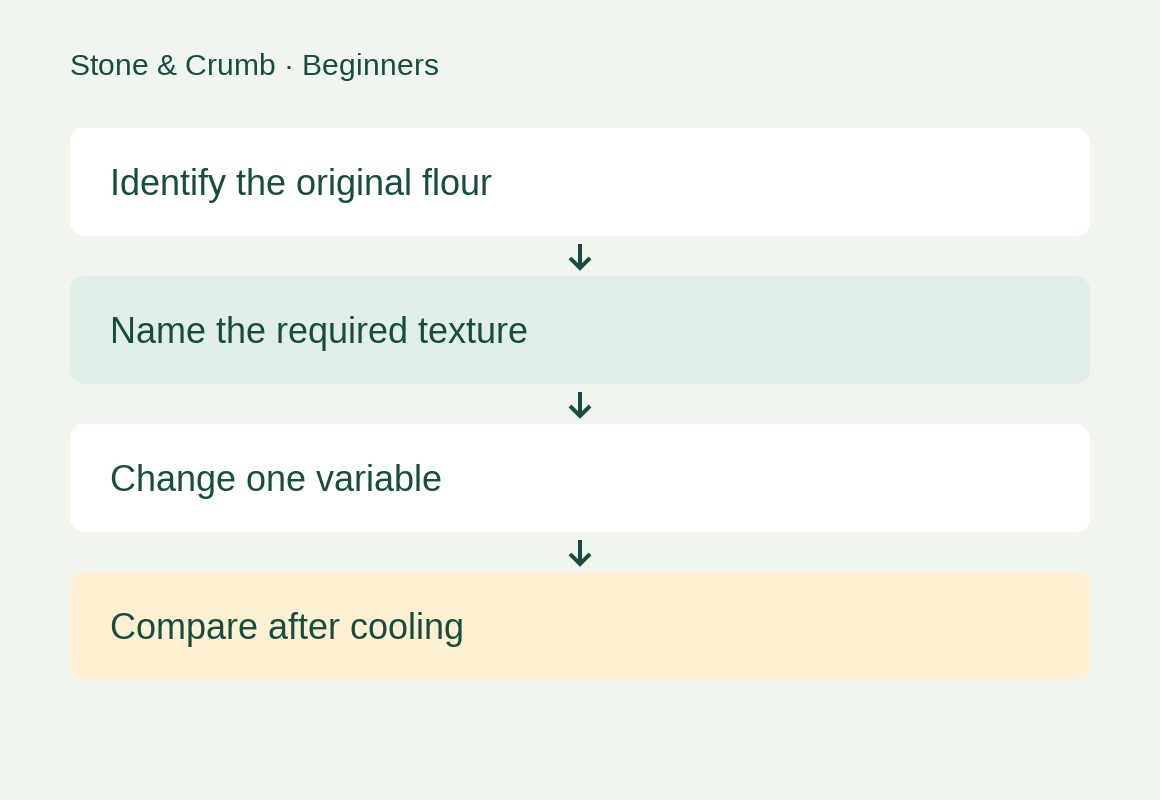
Record the recipe link, ingredient weights, pan dimensions, oven mode, shelf and actual baking time. Add one sentence about texture after cooling. If the outside browned before the centre set, investigate heat and pan geometry before changing the flour. If cookies spread, bake a small comparison before committing the remaining dough.
Repeat the same recipe once with one deliberate adjustment. Keeping most conditions constant makes your notes useful. For quantities, use the recipe scaler; for unexpected results, open failure troubleshooting.