A source-informed practical guide. Examples explain decisions and arithmetic; they are not claims of a kitchen trial by this publication.
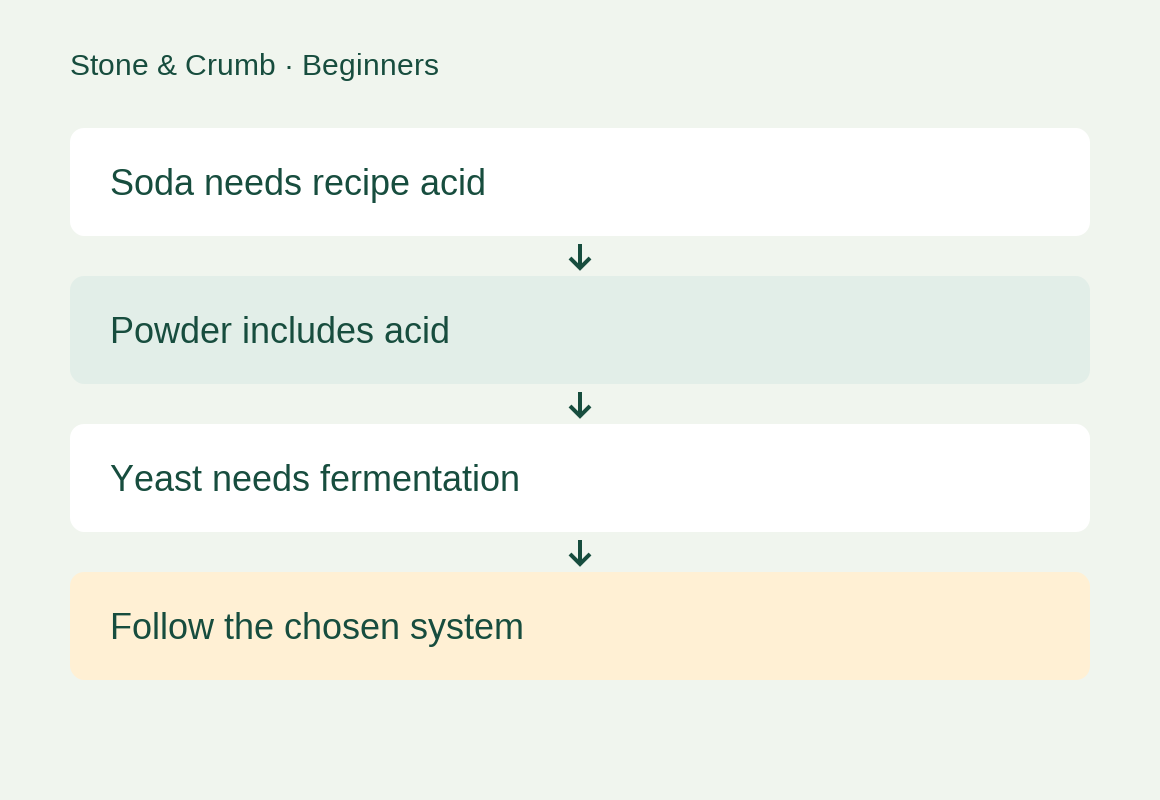
Baking soda, baking powder and yeast all help create gas, but they operate through different systems. Treating them as interchangeable spoons of lift can change flavour, browning and structure. Identify the recipe's intended system before mixing. If the required leavener is missing, a recipe designed around what you have is usually the better starting point.
Recognise the three jobs
Baking soda reacts with suitable acids in a recipe. Baking powder contains a formulated acid and base system; many products release some gas when moistened and more during heating. Yeast is a living fermentation agent that works over time. Its schedule belongs to dough temperature, formulation and yeast quantity.
A cake recipe can use both soda and powder for reasons beyond maximum height, including acidity balance. A yeast bread cannot normally become the same bread simply by replacing yeast with powder. Likewise, a quick bread is designed to set around a chemically leavened batter, rather than a long fermentation.
Check the package before diagnosing the oven
Read the product name carefully. Baking soda and baking powder look similar on a hurried counter. Check the date and the manufacturer's storage directions. Keep the container dry, close it promptly and use a dry spoon. A package that has been exposed to moisture deserves attention before you increase the amount in the recipe.
Measure with the specified spoon or a scale suitable for small amounts. A heaped spoon can change the dose substantially. When scaling down, do not round all leaveners upward for convenience. The recipe scaler shows proportional quantities, but precision still depends on your measuring tools.
If the bake is flat
First ask whether the ingredient was omitted, mismeasured or replaced. Then inspect the method: a batter can lose aeration, and a cake may rise before collapsing because the structure did not set. Adding more powder next time without checking these possibilities can create another failure. A flat cookie may also reflect excessive spread rather than too little gas.
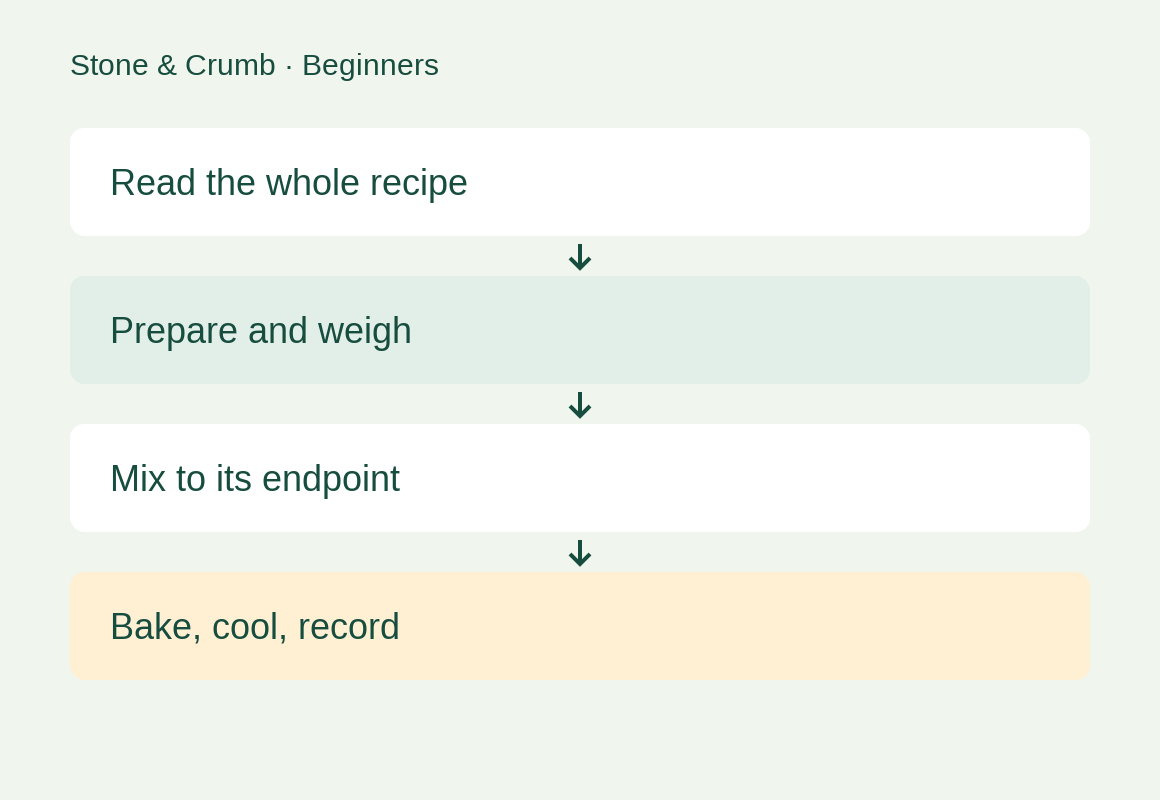
Write down when the mixture was combined, how long it stood and whether the oven was ready. For a chemically leavened batter, an unplanned wait is a useful variable to record. Do not transfer the same waiting rule to a yeast dough that intentionally needs fermentation.
Make the next attempt informative
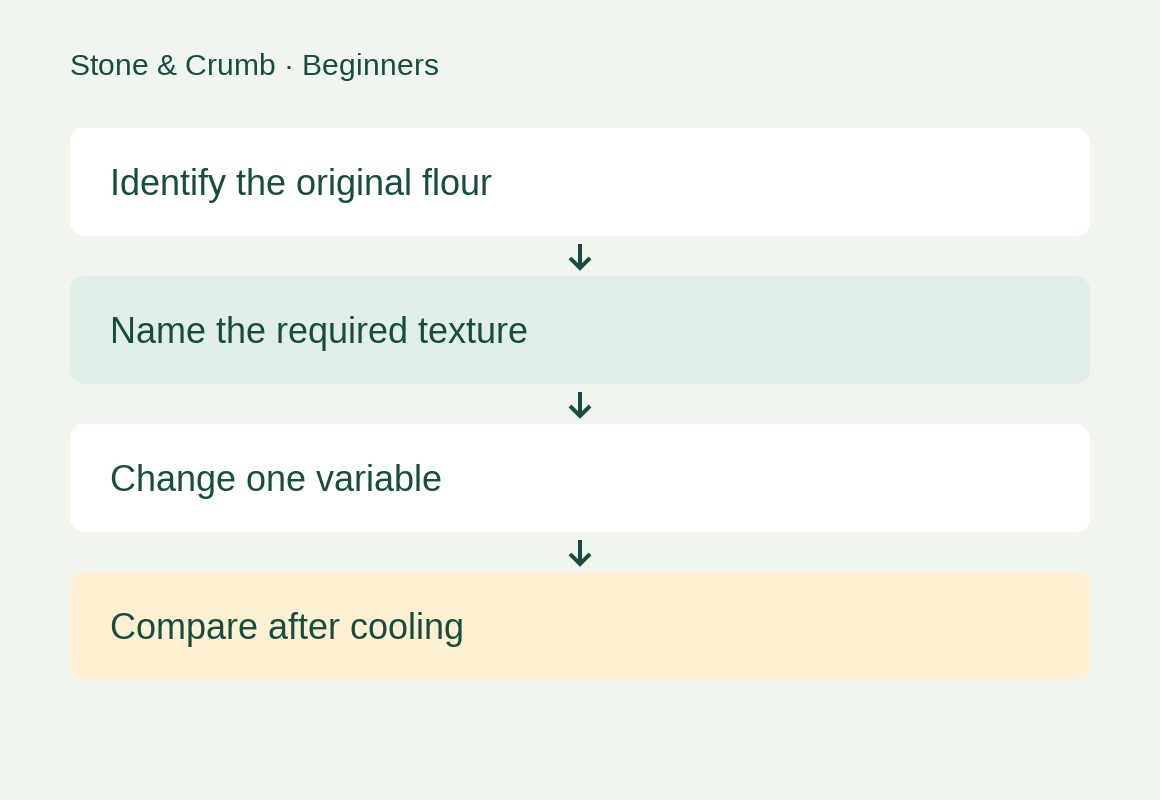
Use fresh, correctly identified ingredients at the recipe's stated quantity. Keep the pan and mixing sequence unchanged. If the result improves, you have narrowed the cause without redesigning the formula. If it does not, inspect mixing and baking conditions next.
There is no general rescue calculation for a batter after an unknown amount of soda or powder has gone in. Guessing with acid or extra flour changes several balances at once. If you cannot reconstruct the amount, make a fresh measured batch rather than promising a dependable outcome from a correction.