A source-informed practical guide. Examples explain decisions and arithmetic; they are not claims of a kitchen trial by this publication.
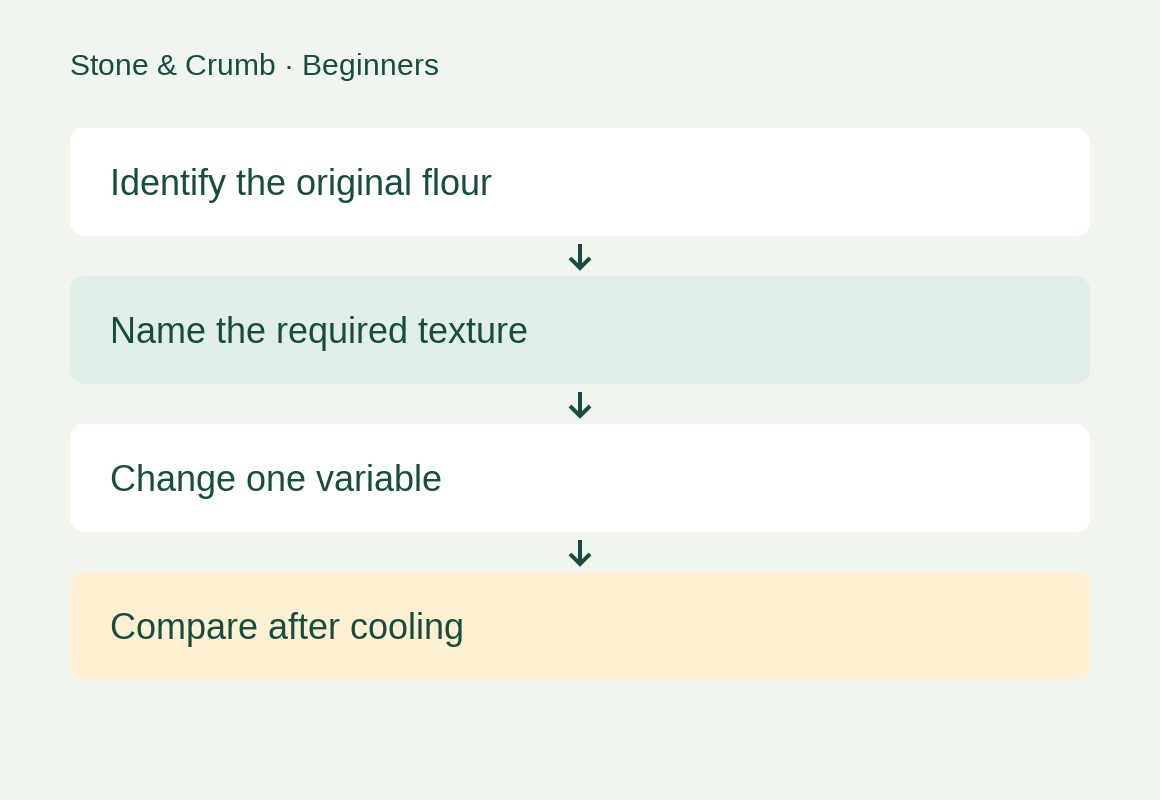
A flour substitution changes more than the colour of the bag. It can alter water demand, dough strength and the way a batter sets. Before replacing anything, identify the recipe's flour and intended texture. An airy wheat loaf, a tender butter cake and a short cookie ask different things of their flour.
Read the flour name in context
All-purpose flour is a category, not an identical worldwide product. Bread flour generally aims for stronger dough development; cake flour aims for a different cake texture. Protein figures can help compare bags, but they do not fully describe performance. The recipe author's specified brand or explanation may be more informative than the category alone.
For a first attempt, keep the specified flour. If it is unavailable, look for a tested version using your available flour. This is especially valuable for sponge cakes and enriched breads, where the balance of strength, fat and liquid is part of the method. Do not use a substitution chart as proof that the result will be identical.
Separate small changes from structural changes
Replacing part of white wheat flour with whole wheat introduces bran and changes handling. Replacing all wheat flour with rice or buckwheat removes the same gluten-forming system entirely. Those are different problems. A gluten-free recipe normally needs a planned combination of starches and structural ingredients rather than one substituted bag.
Self-rising flour also contains leavening and usually salt. It is not plain flour with a different name. Substituting it into a formula that already contains measured baking powder can change the leavening total. For an unfamiliar bag, read the ingredients panel before trying to adjust the recipe.
A controlled comparison for bread
Choose a familiar formula with a clear dough endpoint. Make a modest partial substitution, record the exact masses and keep the remaining ingredients constant. Observe how the dough behaves after mixing and resting before deciding that it needs much more flour or water. Different doughs can feel sticky while still being appropriately hydrated.
Compare rise, ease of shaping and the cooled slice. Do not call a change an improvement merely because the dough was easier to handle: added flour can make handling simpler while producing a tighter loaf. For the arithmetic behind water and flour, read hydration percentage.
Cake and cookie decisions
For cakes, preserve the flour and mixing method together when possible. A tender crumb depends on the complete formula, not just a low protein number. For cookies, note spread and thickness before deciding whether the substitution works. Bake one or two test portions first; the unbaked dough's firmness does not fully predict the finished texture.
Do not use an experimental substitution to make an allergy claim. Ingredient suitability and cross-contact require their own checks. When baking for someone with a dietary restriction, use an appropriate tested recipe and check every ingredient label. For an everyday shortage, selecting a different bake is often the most dependable substitution strategy.