A source-informed practical guide. Examples explain decisions and arithmetic; they are not claims of a kitchen trial by this publication.
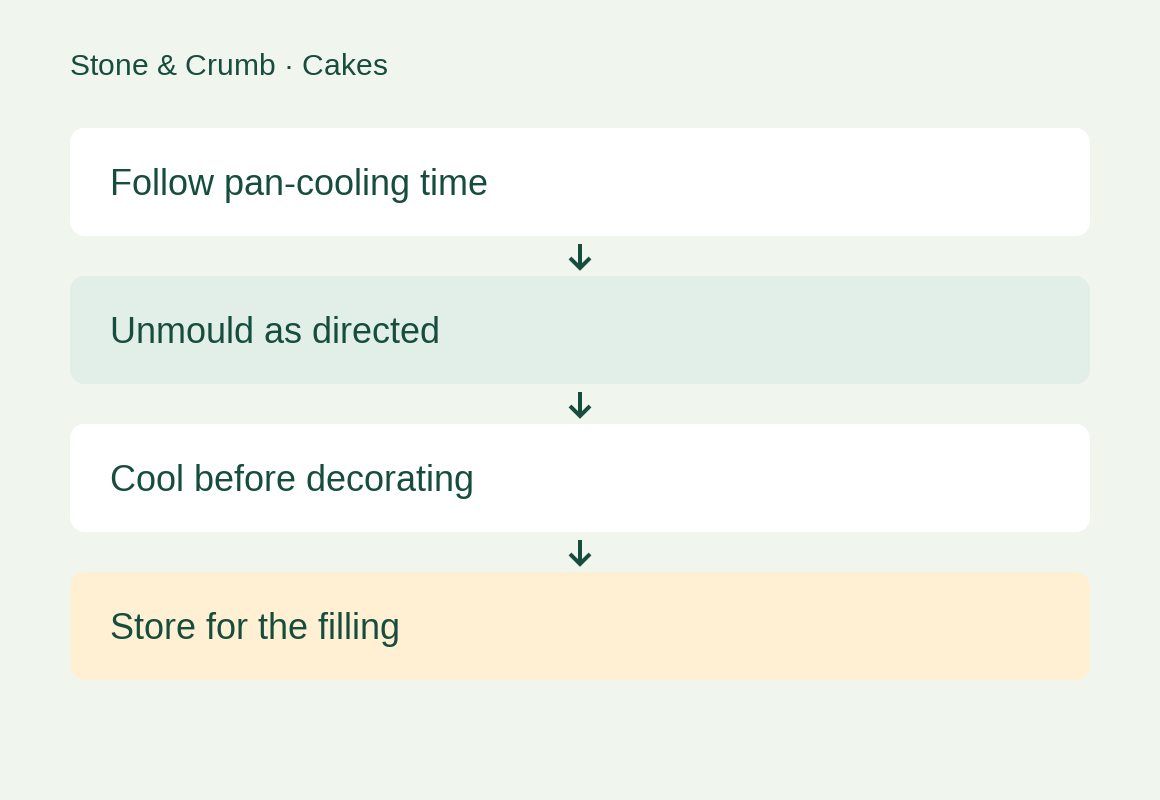
Cooling is part of making a cake, not simply a wait before eating. The crumb becomes easier to handle, trapped steam escapes and frosting conditions change. Storage then depends on the complete product, including filling and decoration. A plain unfrosted cake and one filled with cream should not inherit the same countertop schedule.
Read the cooling instruction first
Before baking, check whether the recipe asks for a brief pan rest, complete cooling in the tin or a particular inversion method. Do not invert every cake because that worked for a chiffon cake. Prepare a stable rack and a clear area large enough for the pan before taking it out of the oven.
If release is difficult, inspect whether the specified lining and greasing were used. Pulling harder can tear a warm cake. Follow the recipe's release method and use appropriate tools; avoid cutting a nonstick surface with a metal knife. Record the problem for the next batch rather than disguising a torn base in the tin.
Decorate a suitably cooled surface
Feel for warmth in the centre as well as at the thin edges before frosting. Butter-based icing can soften against residual heat, and a filling may slide between warm layers. If a recipe specifies chilling before assembly, include that stage in the schedule rather than substituting a rushed minute beside an open window.
For layer cakes, work on a level surface and keep the intended layers in order. Do not stack a visibly fragile or partially collapsed layer under a heavy filling. Decoration cannot repair an unsupported centre. For that problem use cake sinking checks.
Choose storage for the complete cake
Follow the recipe and ingredient guidance for fillings or frostings that require refrigeration. Wrap or cover the cake appropriately so exposed surfaces do not dry out. Do not let a general warning about refrigerated bread overrule the storage needs of a cream-filled cake. Quality and food safety answer different questions.
For a plain cake you intend to freeze, cool and wrap according to its recipe, label it and plan how it will thaw. Consider freezing portions if you only need a slice at a time. Delicate decoration, fresh fruit and particular fillings may not tolerate the same treatment as an unfrosted layer.
Build a realistic serving plan
Write the bake, cool, fill, chill and serve stages backwards from the serving time. Include transport conditions if the cake will travel. Keep the storage history clear, especially when other people move the cake between locations. There is no universal room-temperature life for everything called cake; use product-specific instructions and local food-safety advice.