A source-informed practical guide. Examples explain decisions and arithmetic; they are not claims of a kitchen trial by this publication.
For a cake made by creaming butter and sugar, the first checkpoint is the butter's condition. It should match the recipe's instruction rather than simply having sat on the counter for a fixed time. A cool kitchen and a warm one produce very different results. This guide concerns the creaming method; reverse-creamed and melted-butter cakes follow different sequences.
Inspect before switching on the mixer
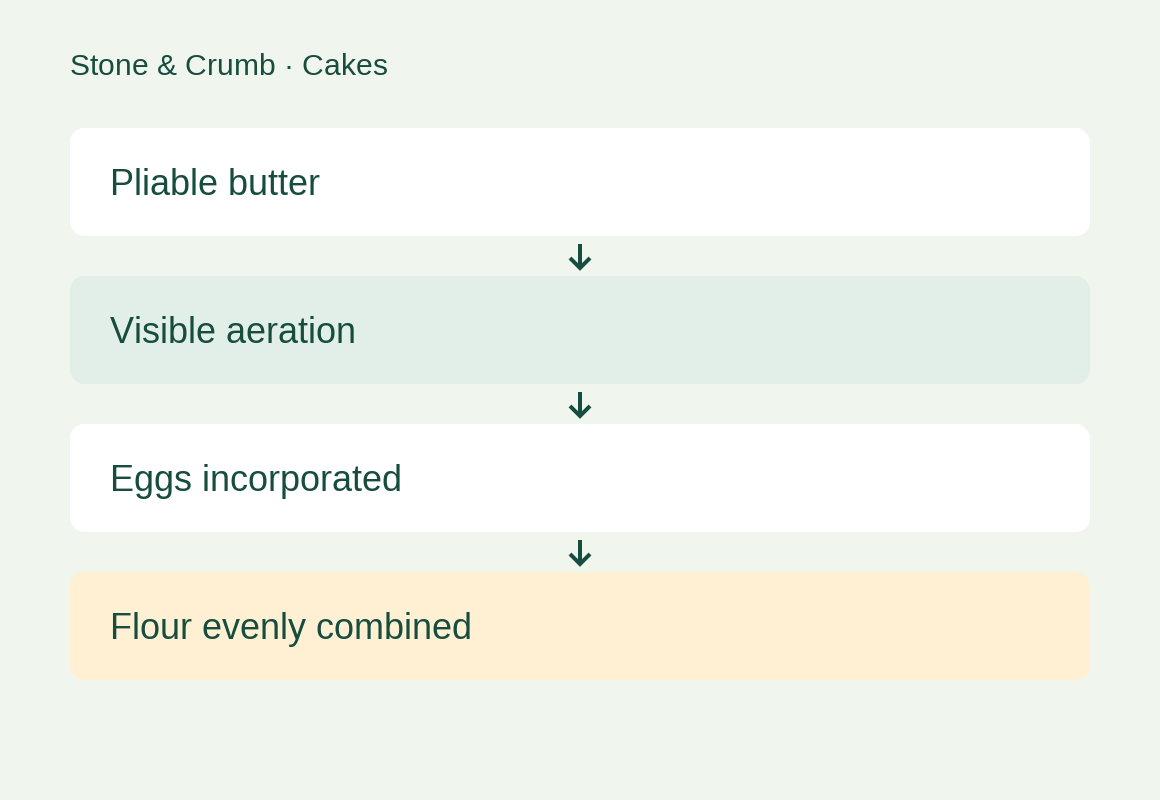
Cut a piece with a spatula. Butter that resists breaking apart is likely to remain in lumps; butter that is oily or partly melted will not behave like a pliable solid. Follow the recipe's temperature guidance where available. Do not microwave until liquid and then assume that cooling it briefly restores the original working state.
Use the bowl and attachment specified for the batch. A small amount of butter may sit below the reach of a large mixer's beater. If the attachment smears only the top, stop and scrape rather than turning up the speed and hoping the bottom will join in.
Look for the change the recipe requests
Creaming creates air pockets in the butter mixture. Watch for increased lightness and volume, while remembering that butter colour and sugar type affect appearance. The mixture should be evenly worked, without a hard collar of unincorporated fat on the bowl. A duration is a reminder to inspect, not a universal endpoint across machines.
Pause to scrape the bowl and beater using a safe method with the motor stopped. Scrape the base as well as the walls. A cake can appear uniform from above while a dense layer remains at the bottom of the bowl.
Add eggs in the stated sequence
A large addition of cold egg can make incorporation more difficult. Prepare ingredients as the recipe directs, then add eggs in its specified increments. Inspect after each addition before moving on. If the mixture looks split, check the recipe's advice rather than pouring in unmeasured flour to make the appearance smoother.
A slightly curdled appearance is a clue about mixing conditions, not by itself a verdict on the finished cake. Record it alongside ingredient temperatures and the timing of additions. That record is more useful than beating indefinitely until the batter becomes warm.
Finish with a check of the whole bowl
Once flour enters, use the specified speed and sequence. Scrape and fold through the base to remove dry pockets. Stop at the recipe's endpoint; do not turn a general warning about overmixing into an instruction to leave flour unincorporated. Transfer the batter to the prepared pan promptly when the recipe calls for immediate baking.
If the cooled cake has a dense stripe, review the mixing record and doneness together. A problem at the bottom can come from several stages. Use cake sinking checks to distinguish loss of support from an uneven mixture, and keep the formula unchanged for your next controlled attempt.