A source-informed practical guide. Examples explain decisions and arithmetic; they are not claims of a kitchen trial by this publication.
If the first tray works and the second spreads or burns, inspect what changed between batches. The oven may have settled into a different cycle, but the sheet may also be hot, greasier or loaded differently. Keeping the setup consistent is a useful way to improve repeatability without changing the dough.
Start each batch on a suitable sheet
Use the pan type the recipe expects where possible. Pale and dark surfaces can produce different underside colour. A warped sheet can tilt dough or melted fat. Set the tray on a level, heat-safe surface and check that it sits securely before loading.
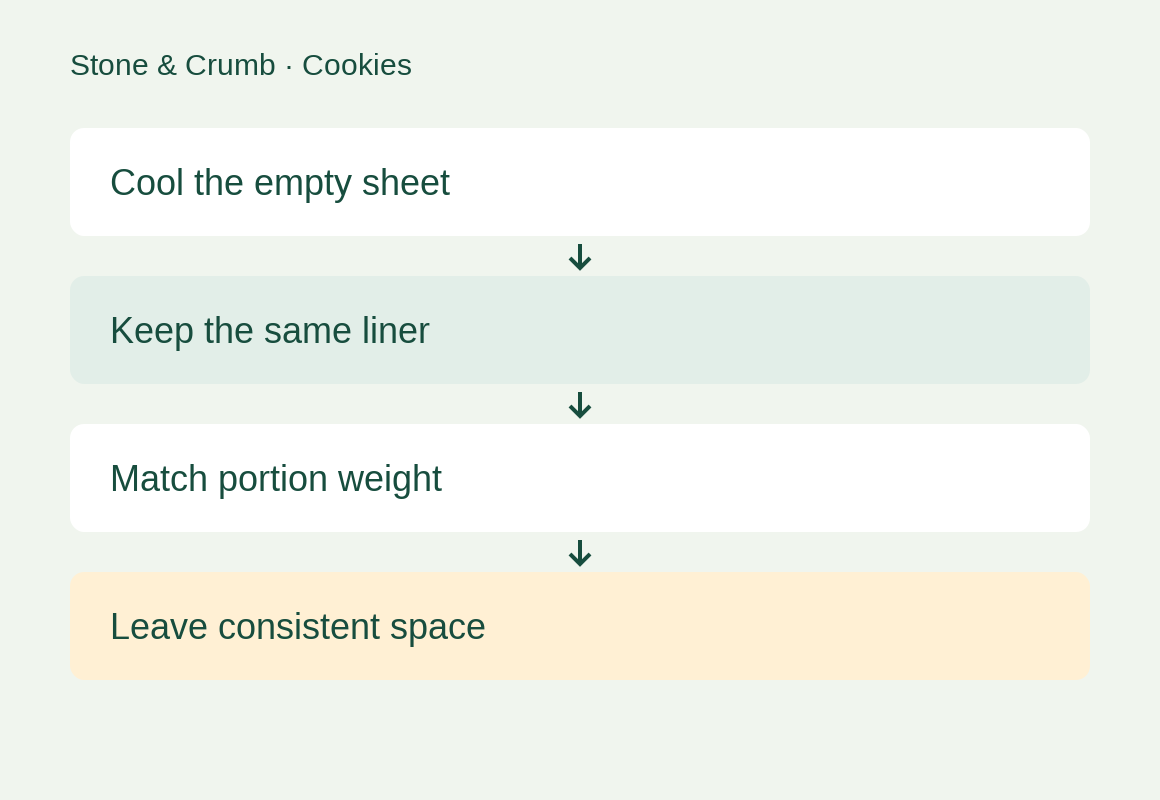
Allow a used sheet to cool fully before adding the next portions unless the recipe explicitly says otherwise. A hot sheet can start softening fat before the dough reaches the oven. Having two compatible sheets makes rotation between batches easier, but a second sheet with different colour or construction introduces another variable.
Preserve the specified baking surface
Use parchment, a silicone liner or an unlined prepared sheet according to the recipe. Do not assume they all produce identical spread. Extra grease added to a nonstick liner changes the working surface again. Keep liner type consistent while investigating a spreading problem.
Check that parchment is suitable for the intended temperature and does not extend near an exposed element. Follow the liner and oven manufacturers' instructions. An improvised cover or loose sheet is not a universal way to prevent browning.
Portion and space consistently
Weigh several dough portions to calibrate your scoop, then keep their size and shape similar. Leave the recipe's required room for spread and airflow. Crowding more pieces onto the final tray may change the result even if every ingredient came from the same bowl.
Bake comparable sizes together. If a batch includes large cookies and small scraps, treat them as separate groups with appropriate checking. Keep the unbaked dough at the condition required by the recipe while waiting for the oven.
Record the actual batch setup
Note tray colour, liner, shelf, portion mass and whether one or two trays were in the oven. If two shelves require rotation, use the recipe's guidance at an appropriate stage. A result from one tray does not establish the same timing for a crowded oven.
After cooling, compare the first and last batches. If only the later batches spread, examine warming dough and sheets first. If the undersides darken on one particular pan, investigate that pan before altering sugar. These observations help you correct a working condition while keeping a successful formula intact.