A source-informed practical guide. Examples explain decisions and arithmetic; they are not claims of a kitchen trial by this publication.
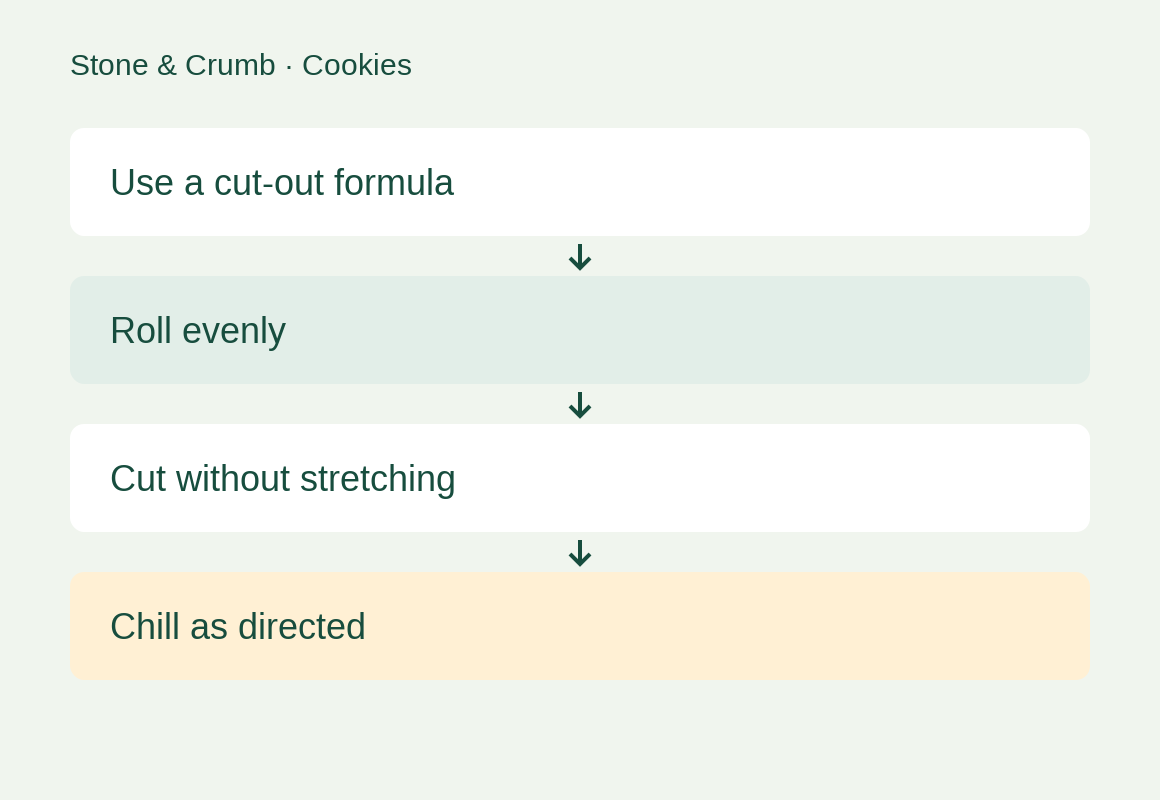
A dough designed to spread into a chewy drop cookie is not automatically suitable for a detailed cutter. Start with a tested cut-out recipe whose intended texture matches your decoration plans. Then control thickness and handling. Even a good formula can lose shape if the pieces stretch on transfer or warm substantially before baking.
Prepare a repeatable rolling surface
Set up the sheet, liner and cutters before removing chilled dough. Follow the recipe's advice on rolling between parchment or on a lightly floured surface. Use only the flour required to prevent sticking; adding more at every pass changes the scraps compared with the first rolled sheet.
Aim for a consistent thickness across the entire piece of dough. Rolling guides can help, but a ruler at several points also reveals a sloping sheet. Thin tips brown faster than thick centres, so very intricate cutters require more careful size matching than simple circles.
Cut without distorting
Press the cutter straight down and lift cleanly. Support the piece with an appropriate spatula or use the recipe's method for removing surrounding scraps before moving the shapes. Pulling a soft star by one point stretches it before it reaches the oven. What looks like oven spread may have started on the worktop.
If the dough becomes sticky and difficult to handle, follow the prescribed cold rest instead of continuously adding flour. Work in manageable portions and keep the rest under the recommended storage conditions. The goal is workable dough, not a race to finish the entire batch before it warms.
Treat scraps as a separate group
Gather scraps gently and reroll as directed. Record how often they have been rerolled; repeated handling and flour additions can produce a different cookie. Bake heavily rerolled pieces separately if their thickness or condition differs from the first cuts.
Arrange similar sizes together with the spacing the recipe requires. A small cutter and a large cutter on the same tray may not reach the intended colour together. Keep a cool tray available for the next batch.
Evaluate after cooling
Compare outline, edge colour and centre texture. If the shapes distorted before baking, correct transfer and dough handling. If they entered neatly and spread substantially, review formula, chilling and baking surface. See excess spread checks for the controlled two-cookie test.
Decorate only when suitably cool and store according to the icing and filling used. A sharp outline is a useful design goal, but it should not come from arbitrary flour additions that make the cookie unpleasant to eat.