A source-informed practical guide. Examples explain decisions and arithmetic; they are not claims of a kitchen trial by this publication.
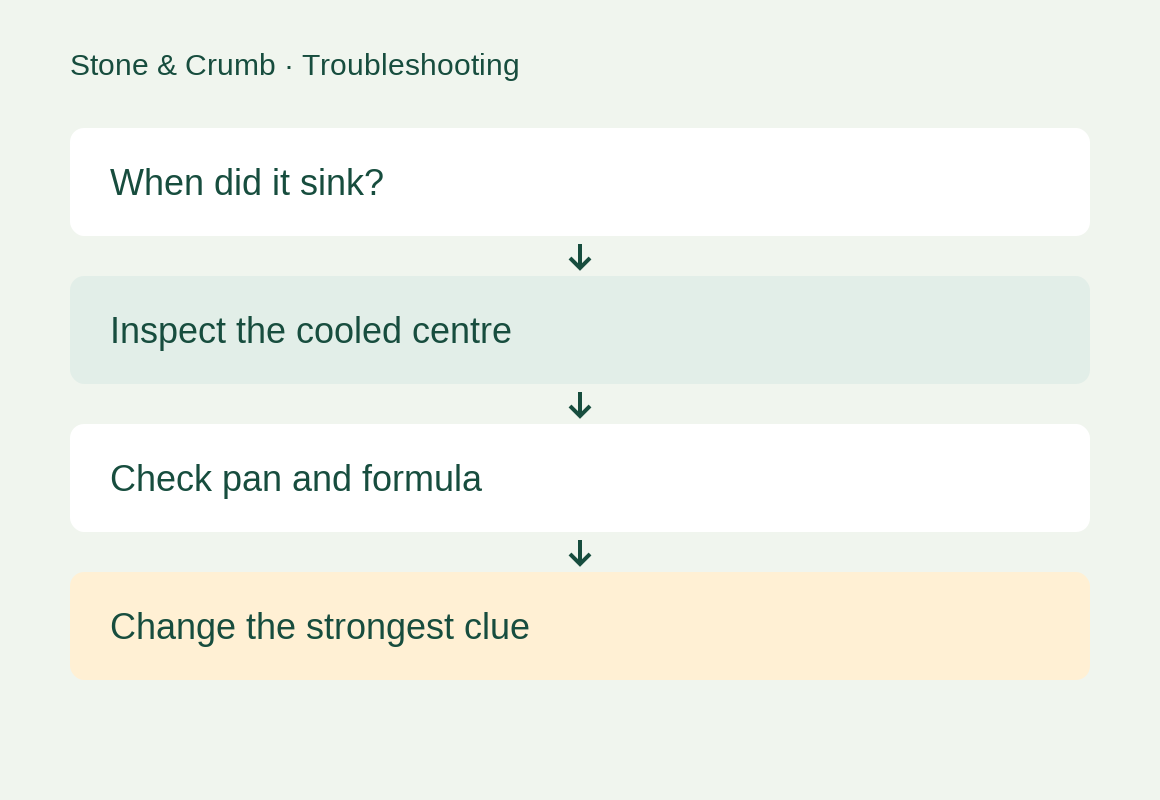
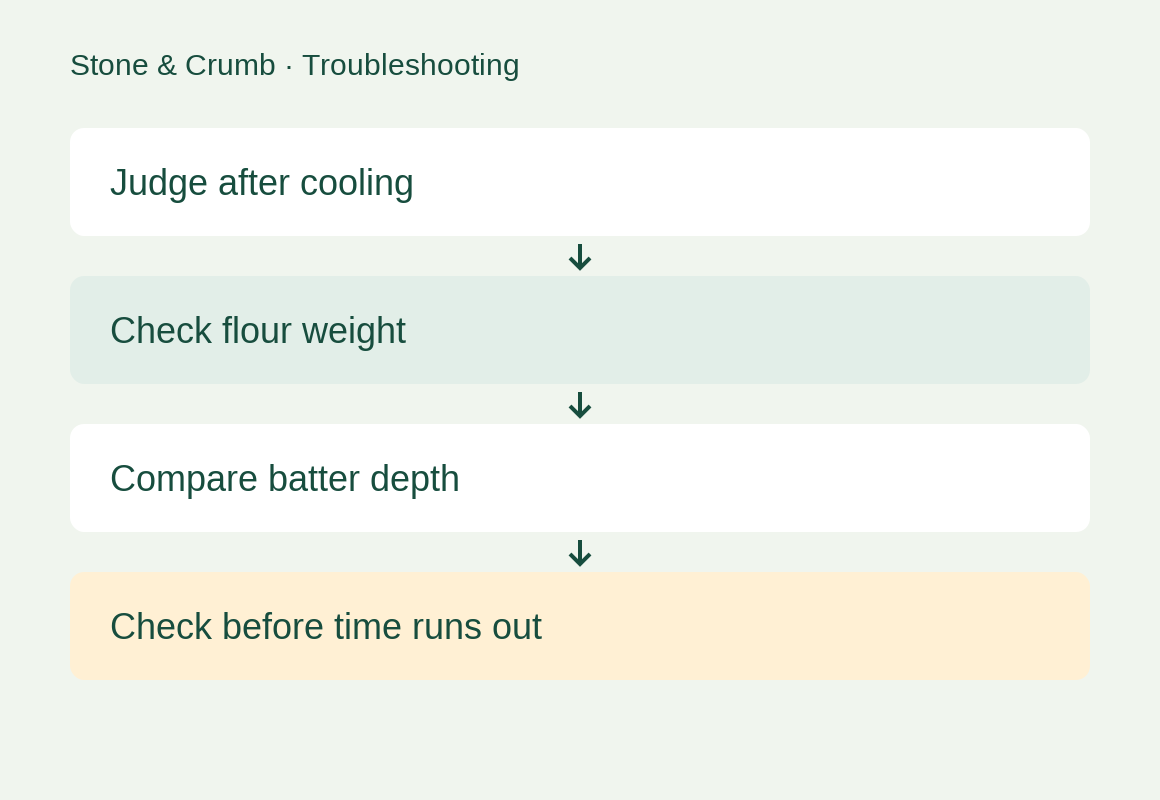
Judge cake texture after the specified cooling period, without treating a warm slice as a final result. A cake can seem dry because it was baked too long, started with too much flour or used a different balance of sugar and fat. Storage adds another possibility. The useful first question is whether it was dry from the first cooled slice or only later.
If it was dry immediately
Check ingredient measurement. Scooping flour tightly into a cup can increase the amount compared with a loosely filled measure. If the recipe provides grams, compare your actual mass with that figure. Do not compensate with extra milk before establishing what went into the bowl. A new liquid addition changes the recipe rather than correcting a known error.
Review the pan. The same batter spread across a larger area forms a thinner layer and may finish sooner. A smaller batch in the original pan does the same thing. Record internal dimensions and the number of pans, not just the label printed on the packaging.
Use several finishing clues
For an ordinary cake, the recipe may describe colour, spring-back, edges and a tester inserted in the centre. Use those cues together. A skewer test for a flourless cake or a fudgy brownie can mean something different, so do not demand an absolutely dry stick from every product.
Treat the stated time as a checking window. Begin inspection at the appropriate point for the actual pan and oven, rather than leaving a clearly finished thin cake inside until the original timer expires. Excessive door opening can create other problems, so use the window and a planned check rather than constant poking.
If it became dry during storage
Ask whether the cake was cut and left exposed, stored warm with condensation or chilled without adequate wrapping. The filling and frosting determine storage requirements, so a quality preference never overrides a perishable filling's refrigeration needs. Use the recipe's storage instructions and cover exposed cut surfaces appropriately.
If you know you need the cake later, plan portioning and freezing around the specific recipe instead of leaving it exposed for days. See cake cooling and storage for a workflow that separates structure, decoration and storage decisions.
What can be done with this batch
A fully baked cake with appropriate handling may be served with a suitable accompaniment or used in another preparation. A syrup can change eating texture, but it does not reverse overbaking or establish safety. Avoid soaking a cake indiscriminately when it must support heavy layers or travel.
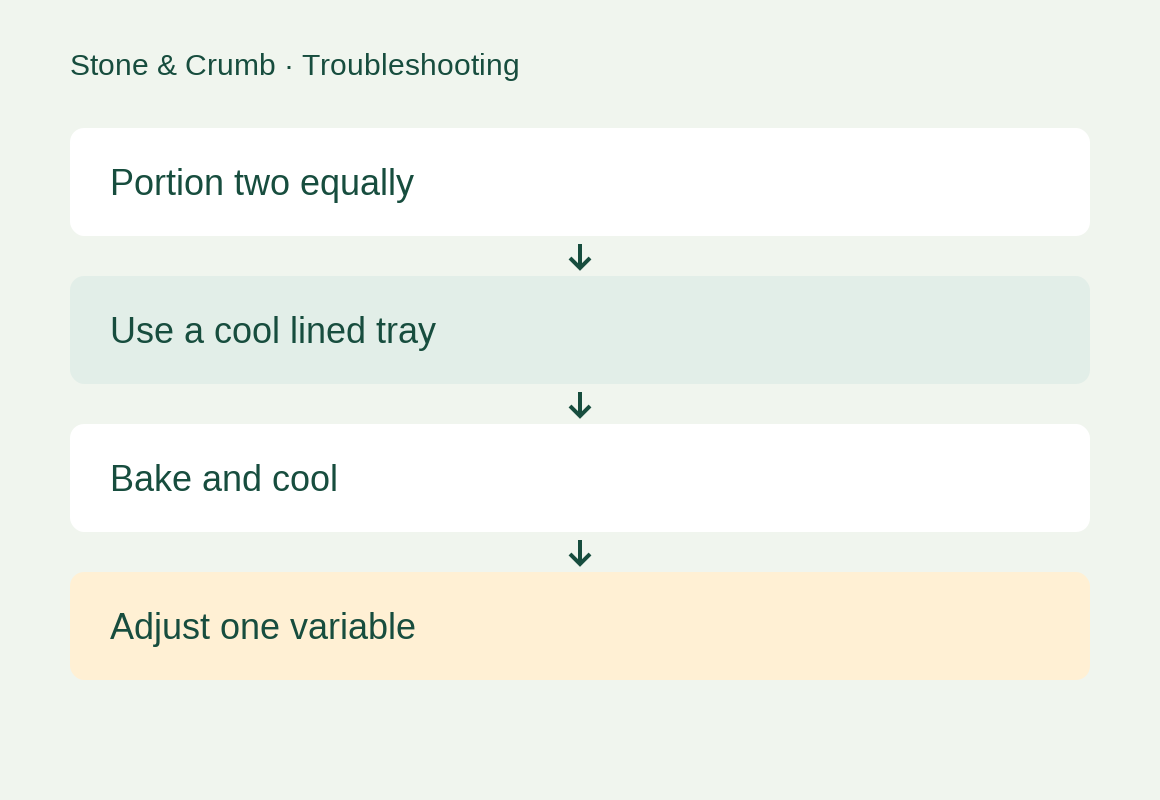
For the next attempt, choose the strongest observed cause. Weigh flour if the cup measure was uncertain. Restore the intended depth if you changed pans. Check earlier if the cake was already fully set before removal. Record that one change and assess a cooled slice again. A repeatable improvement teaches more than replacing the whole recipe after a single dry result.