A source-informed practical guide. Examples explain decisions and arithmetic; they are not claims of a kitchen trial by this publication.
Dense bread can result from too little expansion, poor gas retention, inappropriate handling or an incomplete bake. Extra yeast only addresses some possibilities. Begin with the dough's history and a fully cooled slice. A rye-rich loaf also has a different expected crumb from an airy white wheat loaf, so identify the intended bread before judging it.
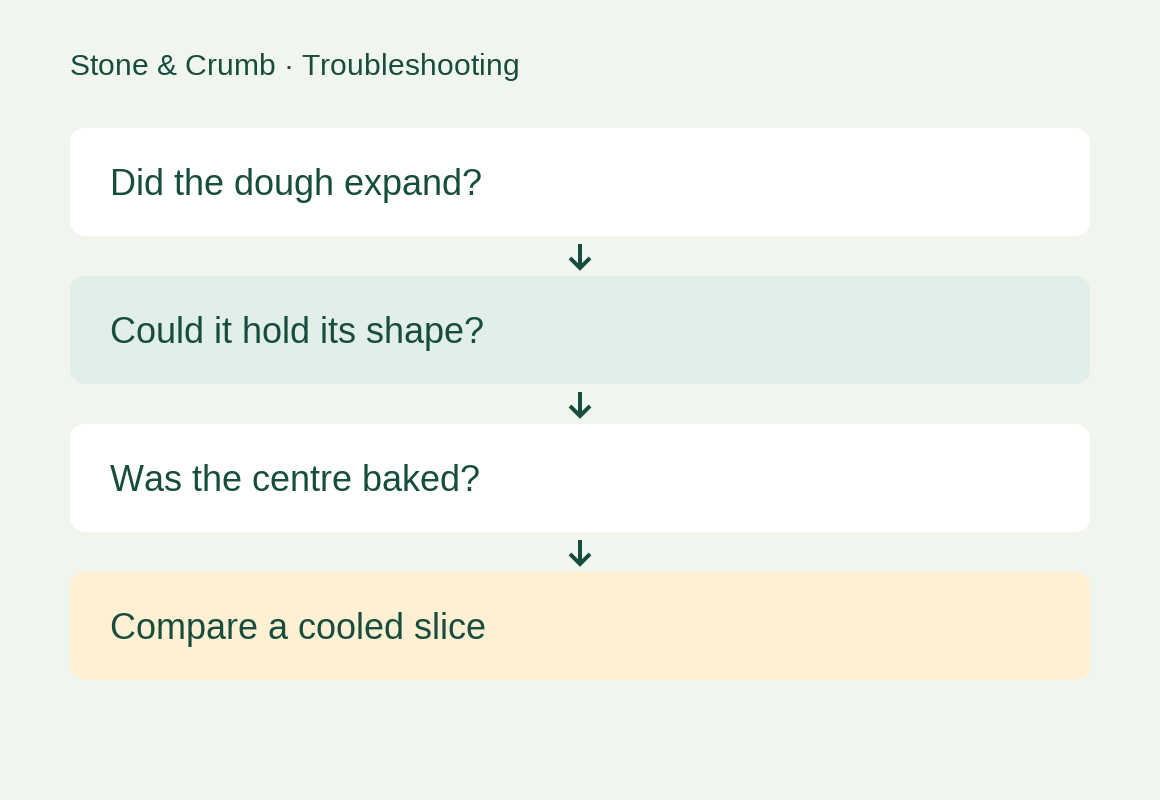
Did the dough expand at all?
Review yeast or starter condition, actual dough temperature and the recipe's rise endpoint. Marking the starting level in a straight-sided container makes expansion easier to observe. A recipe's hour estimate is less informative than whether your particular dough changed as described.
If a dough stayed almost unchanged, inspect ingredient identity and preparation. Was yeast omitted, was the wrong product used, or was starter added before its intended readiness? Do not place dough in uncontrolled strong heat to catch up. Use the recipe's temperature guidance and check periodically.
Did it expand and then lose strength?
A dough can make gas but fail to retain a useful shape. Consider flour suitability, mixing development, folds and fermentation extent. If dough rose substantially and then flattened, simply giving it longer may worsen the problem. Record the point at which it became difficult to shape.
For wheat dough, assess development using the recipe's handling cues. A windowpane is not a universal requirement for every grain mixture. Adding flour until nothing sticks can make a dough easier to hold while changing the intended balance. See sticky dough decisions.
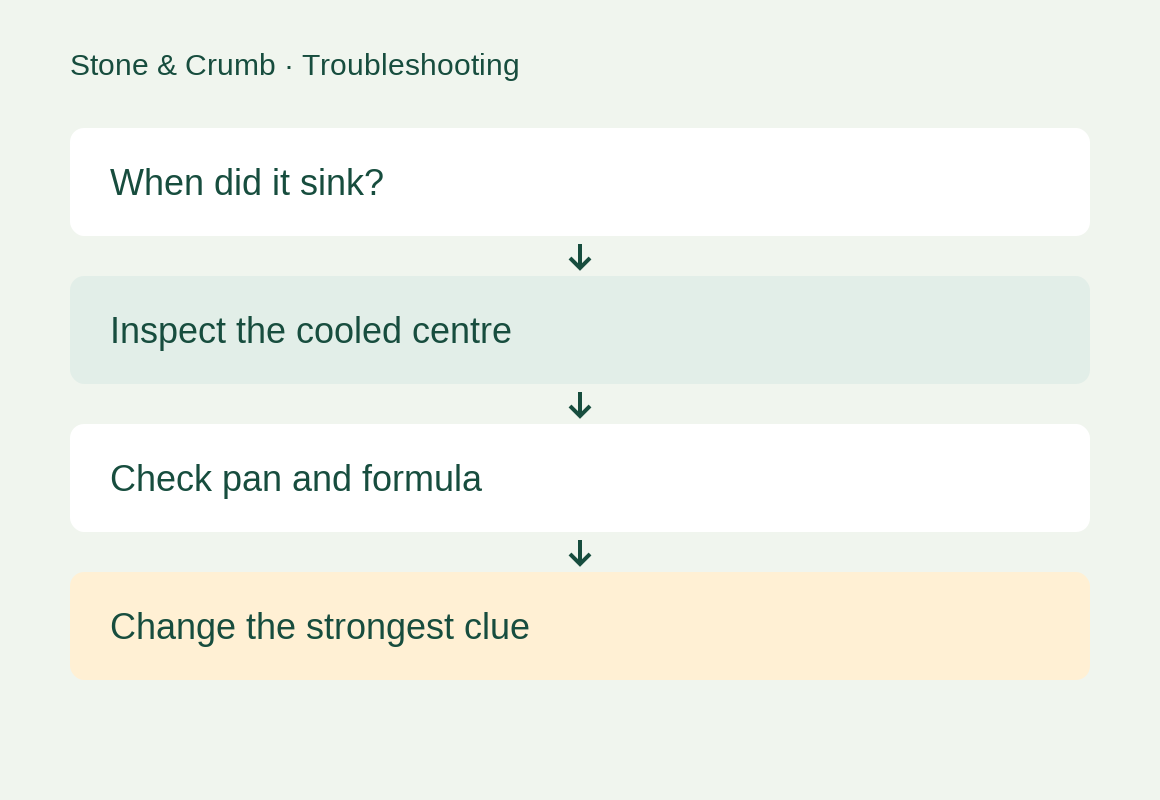
What does the cooled slice show?
Allow the prescribed cooling period before cutting. A warm crumb can smear and compress. Note whether the loaf is uniformly tight, has large holes over a dense base or contains a wet centre. These are clues rather than unique diagnoses; combine them with rise and mixing records.
Check loaf size and the actual bake. A heavier piece in the same pan may need a different process from the tested recipe. Crust colour alone cannot establish the centre's state. Use the recipe's doneness checks and keep the pan dimensions in your notes.
Plan the next batch around evidence
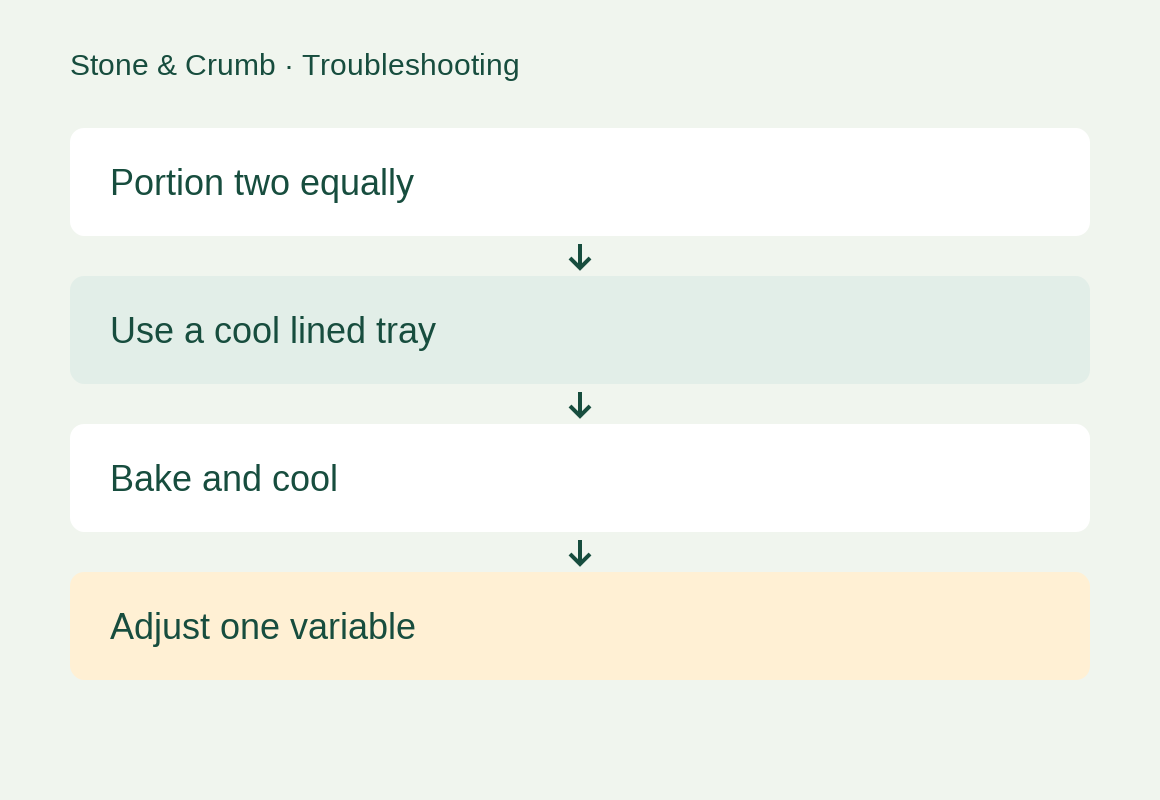
If there was little expansion, restore the specified ferment and temperature conditions. If the dough expanded but collapsed, review the endpoint and strength. If it was cut hot or underbaked, address baking and cooling before changing fermentation.
Keep flour, formula and shape constant for the comparison. The proofing guide helps you describe the dough's state, while the troubleshooting tool gives a short route back to the relevant checks.