A source-informed practical guide. Examples explain decisions and arithmetic; they are not claims of a kitchen trial by this publication.
Sticky dough is an observation, not automatically a mistake. High water content, flour type, mixing development and temperature can all affect how dough feels. Before adding flour, compare the mixture with the recipe's intended handling and verify the quantities. A soft wheat dough should not be forced to feel like a firm bagel dough.
Check arithmetic before technique
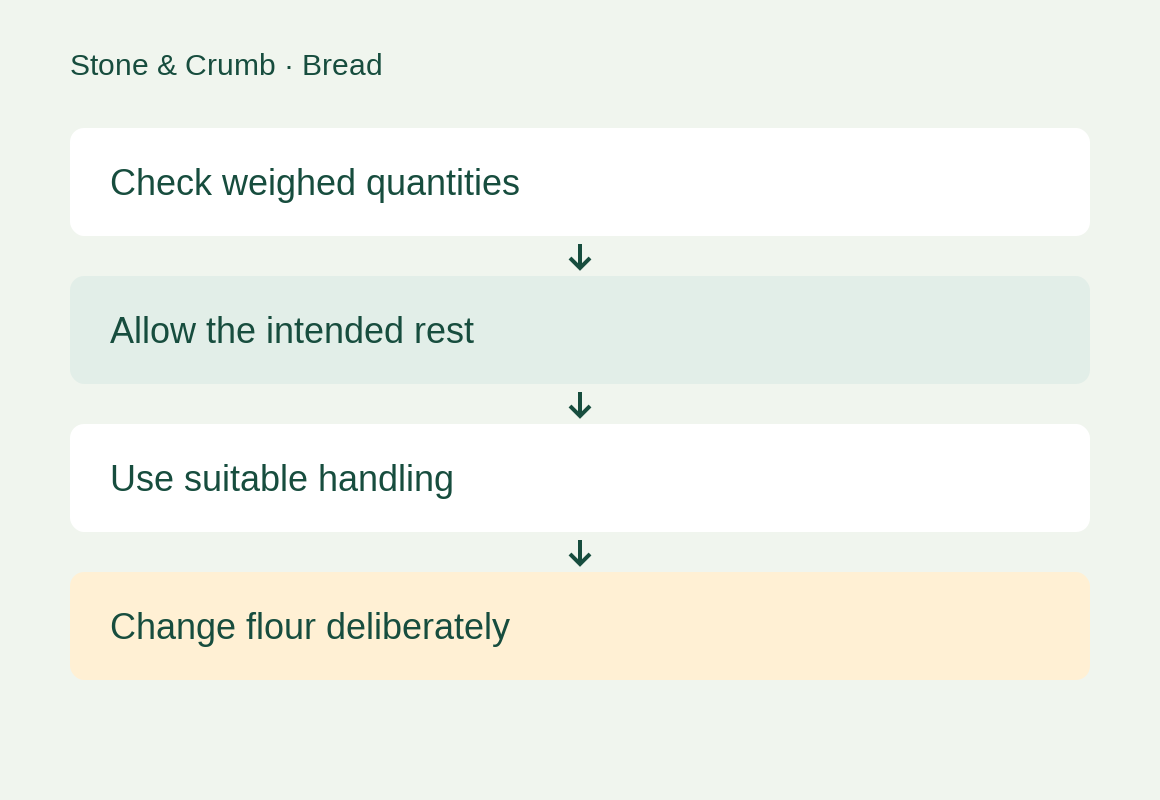
Review the water and flour masses, including flour and water already present in a starter. Confirm that the scale was on the intended unit and tared correctly. A doubled liquid amount is a different problem from normal tackiness. If a known error can be reconstructed, correct the formula deliberately rather than dusting continuously.
Use the hydration guide to calculate the starting ratio. Milk, eggs and butter are not pure water, so a simple water-to-flour calculation does not fully describe an enriched dough. Keep those ingredients separate in your notes.
Give the method its intended time
Follow any specified rest and development steps before judging the final consistency. A newly combined mixture can behave differently after hydration and mixing. Do not add an arbitrary long rest to a dough already fermenting rapidly; the recipe's sequence and temperature still matter.
For suitable wheat doughs, folds or mixing can improve cohesion. Use the method named in the recipe and stay within your mixer's operating limits. More motor time is not a universal cure, especially if the dough is getting noticeably warmer or the flour has limited strength.
Improve contact rather than changing the formula
A scraper and decisive lifting movements can reduce prolonged sticking to the bench. Use damp or lightly oiled hands only when the recipe supports that approach, and avoid introducing large uncontrolled amounts. A light surface dusting for shaping is different from mixing handfuls into the dough.
If the dough is intentionally very wet, use its prescribed container, folds and shaping method. If that style is frustrating on your first attempts, choose a tested lower-hydration recipe next time instead of secretly converting the current one while working.
Know when the problem is different
Dough that became slack after substantial fermentation may be losing strength; additional time or more surface flour may not restore it. Check proofing readiness and record when the handling changed. A rye-rich paste should not be assessed against a wheat windowpane.
For the next batch, keep a weighed record and choose one adjustment supported by the strongest evidence. If you do alter water, write the amount and new ratio. That gives you a repeatable version rather than an unrecorded dough that only worked because the bench absorbed an unknown quantity of flour.