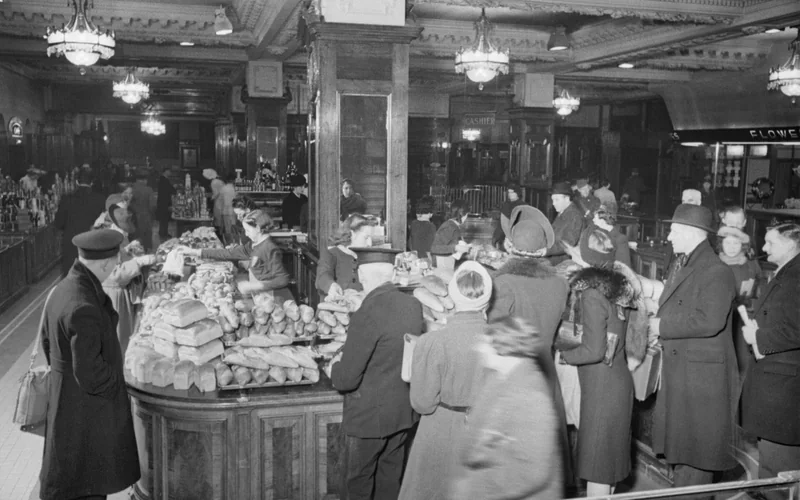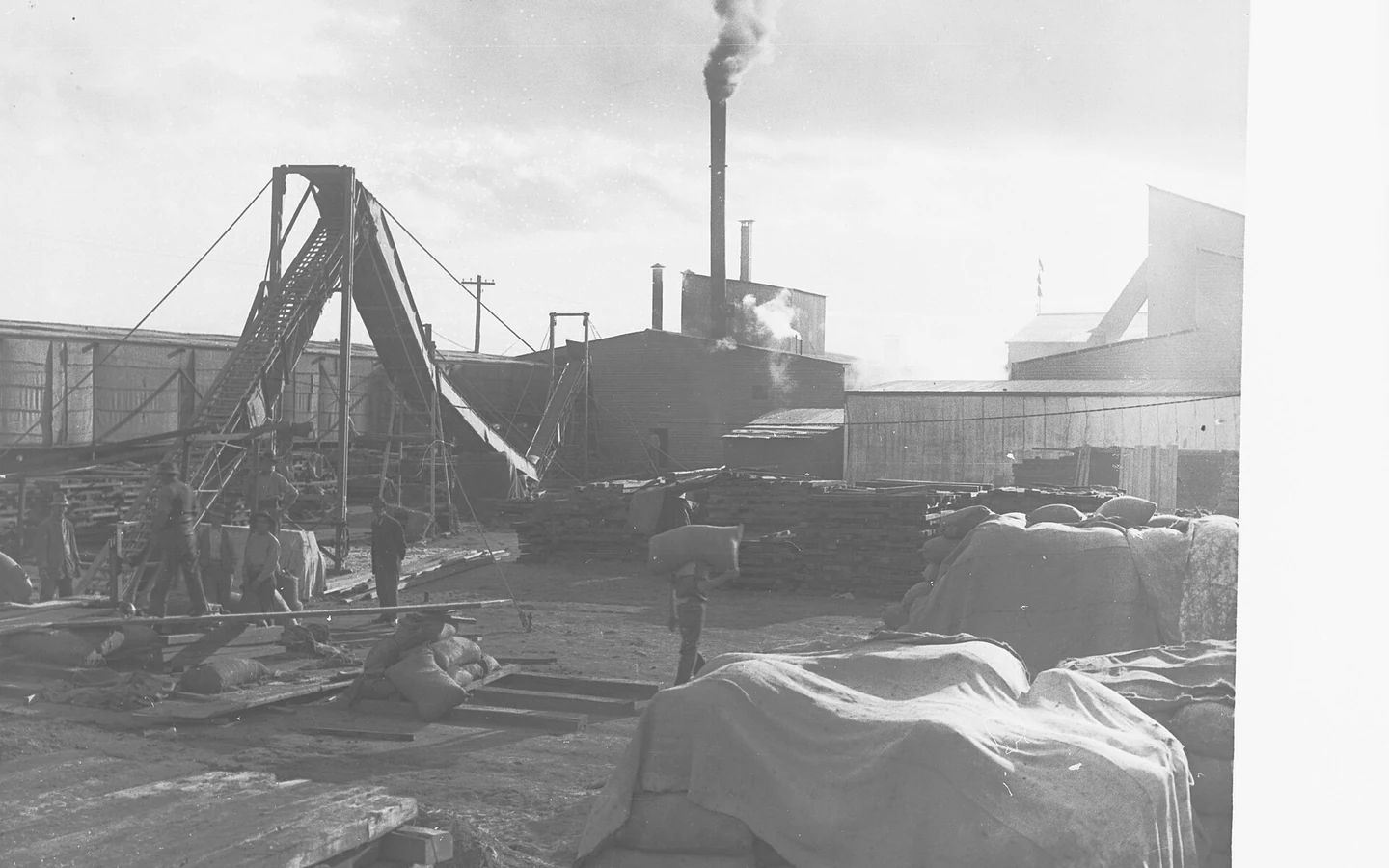
A city that eats bread must import grain, mill it, distribute flour, and get bread baked and sold daily. Studying two well-documented cases four centuries and an ocean apart shows that the same components appear in both, and that the difficult parts were rarely agricultural.
Flanders in the Burgundian period
A 1977 study of the Lille wheat market examines this problem in the late medieval Low Countries, a densely urbanised region that could not feed itself from its immediate surroundings.
Flanders drew its wheat from what the study calls the Haut Pays: the fertile lands of Artois, the Mélantois, and as far as the Cambrésis. The trade concentrated on wheat, with oats and rye also moving.
More interesting than the sources is the structure that handled the flow. The study identifies Saint-Omer, Aire-sur-la-Lys, Béthune, Lille and Douai as the principal regulating markets for this bulk trade. A regulating market is not merely a place where grain changes hands; it is where price is discovered and where the flow between surplus and deficit regions is metered.
That is a piece of economic infrastructure, and it existed because grain moved in quantities too large and too irregular for direct producer-to-consumer sale.
Why a canal caused a war
The study supplies one incident that shows how much was at stake. In 1379 the Count of Flanders permitted the people of Bruges to dig a canal giving access to the river Lys in order to bring in grain. What followed, according to the chronicles, was what they called the six-year war between the count and the people of Ghent.
Read as an infrastructure dispute, this makes sense. A new waterway to Bruges would redirect grain flows, and whichever town controlled the route through which grain passed held leverage over everyone downstream of it. Ghent's objection was not to the digging but to the reallocation of that leverage.
Grain supply routes were therefore political assets. That is worth keeping in mind whenever medieval urban conflict is explained purely in terms of privileges and taxes.
Puebla in the nineteenth century
A 2025 study of the wheat shed of the city of Puebla, covering 1810 to 1855, provides a quantified version of the same system.
An average of 61,557 cargas of flour entered the city annually across that period, a volume the study calculates as sufficient for as many as 112,000 inhabitants, in some years close to double the actual urban population. The city was self-sufficient in wheat flour before 1847, with the surrounding region producing a surplus that exceeded demand by up to 70 per cent. By the late 1840s the flour entering the city no longer met demand, a reversal the study attributes to sociopolitical, sanitary and environmental factors together with the city economy's shift away from an agricultural base towards textiles.
The administrative apparatus around that flow is documented in detail. Flour entering the city paid a duty at the gates, known as the right of three cuartillas, which formed a significant part of municipal revenue. The city council's tribunal of the Fiel Ejecutoria controlled official prices, prices generally, weights, measures and operating permits.
And the interested parties pushed. The study records that guilds exerted pressure within the council to regulate or restrict access to the food market in line with their own interests, naming pork butchers and bakers specifically.
The maize institutions, and what they were not for
Puebla also had dedicated grain storage institutions, the pósito and the alhóndiga, established from the seventeenth century to secure supply, moderate prices and prevent speculation. Both closed in the 1840s.
An important qualification: the study is explicit that these were institutions for maize, the grain principally consumed by the popular classes of the city, rather than for wheat. Indigenous sellers paid no duty and did not deposit maize in the alhóndiga, instead selling in small quantities in its courtyard or in the main square.
That division matters for anyone generalising about urban grain policy. Two staple grains coexisted in the same city with different supply chains, different regulatory treatment, and different consuming populations. Wheat flour was taxed at the gate and its price officially set until 1813; maize had public granaries and an informal retail channel.
What the two cases share
Setting the Flemish and Mexican material side by side, four elements recur.
A supplying hinterland that is not the immediate surroundings. Flanders drew on Artois and beyond; Puebla on a wheat shed extensive enough to produce a substantial surplus.
Intermediate markets or institutions where price is set and flow is managed. Regulating market towns in one case, a price-setting municipal tribunal and public granaries in the other.
A fiscal interface at the point of entry. A gate duty on flour in Puebla; control of access routes in Flanders, as the canal episode shows.
And organised trade interests working on the regulator. Bakers pressing the council in Puebla; town rivalries over grain routes in Flanders.
None of those is about growing wheat. They are about moving it, pricing it, taxing it, and deciding who is allowed to profit from each step.
Where else to look
The comparative literature on urban provisioning is substantial. A 1997 article in a Spanish scholarly journal compares provisioning in Mexico City with practice in Spain for the period 1761 to 1786, published across pages 113 to 140 of its volume, which I could confirm bibliographically without reading.
Other traditions exist for other regions, including work on Roman grain administration and on Ottoman supply of the holy cities, with a study of the latter drawing on documents of the 1670s. Those establish that the institutional question has been asked across very different states.
The practical lesson for reading bread history
When an account explains a bread tradition by reference to local agriculture, it is worth asking whether the local agriculture actually supplied the city in question.
In both cases above the answer was partly no. Flanders imported from a considerable distance. Puebla's wheat came from a shed extensive enough to feed twice the city's population, while the maize its poorer residents ate moved through an entirely separate system.
Urban bread traditions were shaped as much by the logistics and the law governing supply as by what grew nearby. The regulating market and the gate duty are as much part of a loaf's history as the field.