Oven and Tool
Heat, mass, steam, and the small tools that decide a crust.
Oven and Tool examines how thermal mass, steam, baking surfaces, and measuring instruments change a loaf, drawing on manufacturer documentation, building research, and heat-transfer literature.
10 articles
Oven and Tool
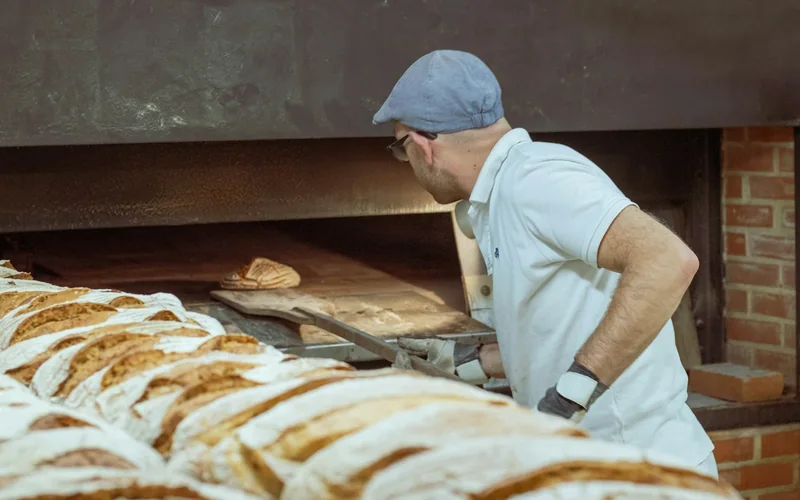
Loading a Commercial Bread Oven: What a Batch Study Actually Measures
An oven study is only as portable as its setup. A static batch oven, its loaf load, sensors and measurement period define what the data can tell us about heat flow and energy use.
 Read story
Oven and Tool
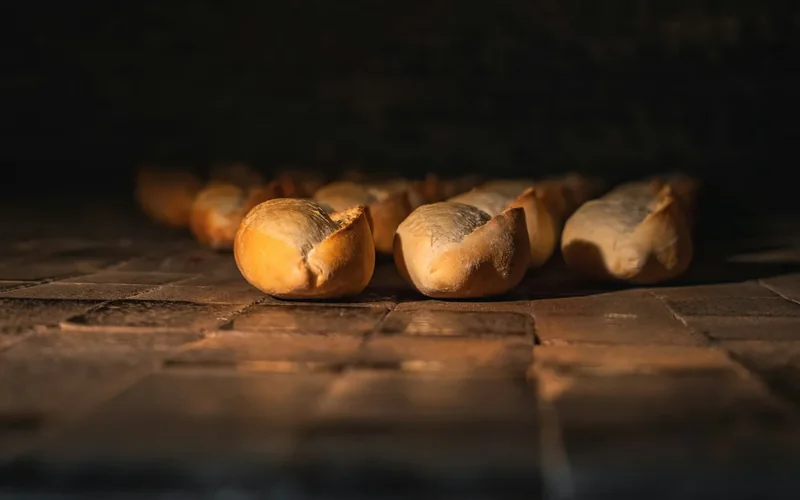
Commercial Steam Injection: What Bread-Oven Manuals Specify
Steam in a commercial deck oven is not simply a tray of water. Manuals describe a designed system with jets, supply conditions and model-specific installation requirements; those details matter more than a universal timer.
Read story
Oven and Tool
Commercial Steam Injection: What Bread-Oven Manuals Specify
Steam in a commercial deck oven is not simply a tray of water. Manuals describe a designed system with jets, supply conditions and model-specific installation requirements; those details matter more than a universal timer.
 Read story
Oven and Tool
High-Altitude Bread Baking: What Lower Pressure Changes
At elevation, gas expands under lower atmospheric pressure and water boils at a lower temperature. Those physical changes matter to bread, but the baker's climate, flour and process determine what adjustments are useful.
Read story
Oven and Tool
High-Altitude Bread Baking: What Lower Pressure Changes
At elevation, gas expands under lower atmospheric pressure and water boils at a lower temperature. Those physical changes matter to bread, but the baker's climate, flour and process determine what adjustments are useful.
 Read story
Oven and Tool
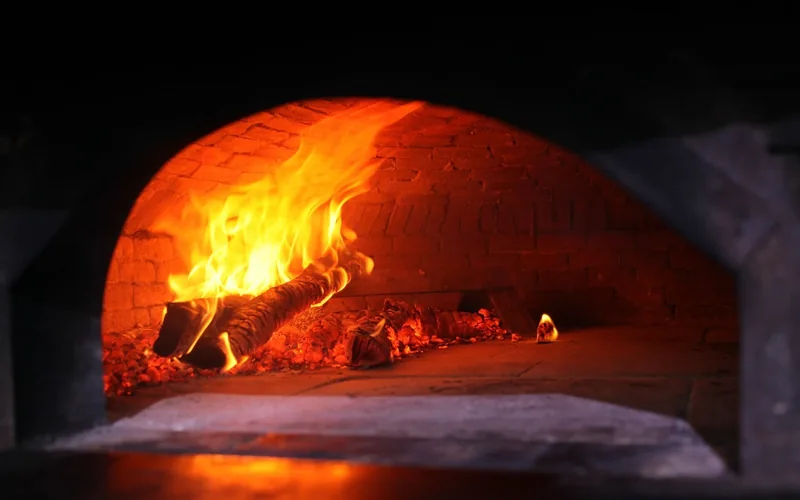
Wood-Fired Ovens: What Thermal Mass Does and What It Does Not
A masonry oven's floor barely moves in temperature while a pizza bakes on it. That stability is the point of thermal mass, and it is one of the few things about these ovens that has actually been measured.
Read story
Oven and Tool
Wood-Fired Ovens: What Thermal Mass Does and What It Does Not
A masonry oven's floor barely moves in temperature while a pizza bakes on it. That stability is the point of thermal mass, and it is one of the few things about these ovens that has actually been measured.
 Read story
Oven and Tool
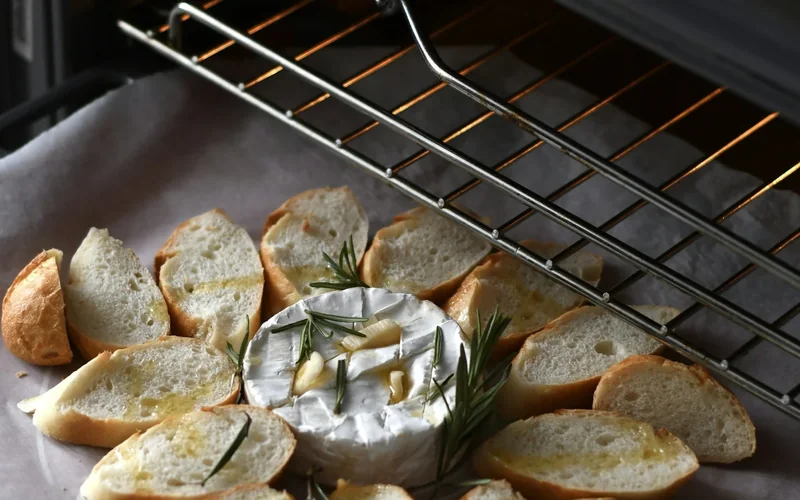
Steam in a Home Oven: A Fourth Heat Path, and a Seven-Minute Window
Steam is usually explained as something that keeps the crust soft. Measured heat budgets suggest a blunter reason it works: condensing water delivers heat by a route that dry air cannot.
Read story
Oven and Tool
Steam in a Home Oven: A Fourth Heat Path, and a Seven-Minute Window
Steam is usually explained as something that keeps the crust soft. Measured heat budgets suggest a blunter reason it works: condensing water delivers heat by a route that dry air cannot.
 Read story
Oven and Tool
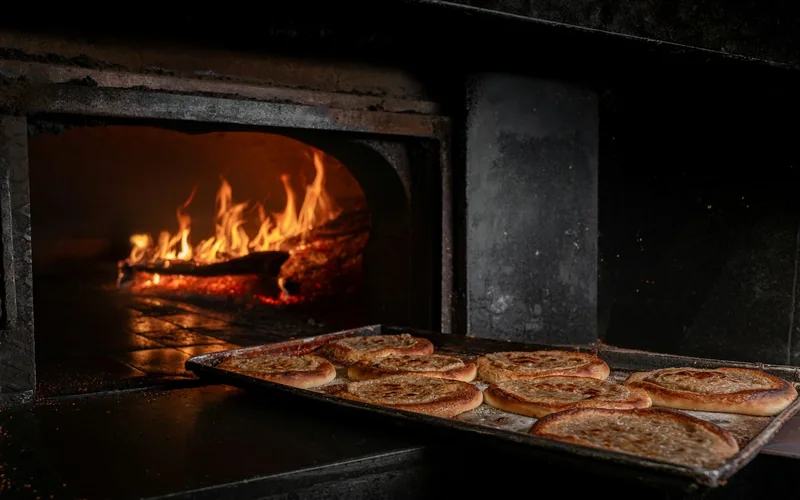
Baking Stone or Baking Steel: The Property That Matters Is Not Conductivity
Steel's conductivity advantage over refractory is enormous and largely beside the point. The number that governs contact heating is a different one, and even it runs into a hard ceiling at the dough base.
Read story
Oven and Tool
Baking Stone or Baking Steel: The Property That Matters Is Not Conductivity
Steel's conductivity advantage over refractory is enormous and largely beside the point. The number that governs contact heating is a different one, and even it runs into a hard ceiling at the dough base.
 Read story
Oven and Tool
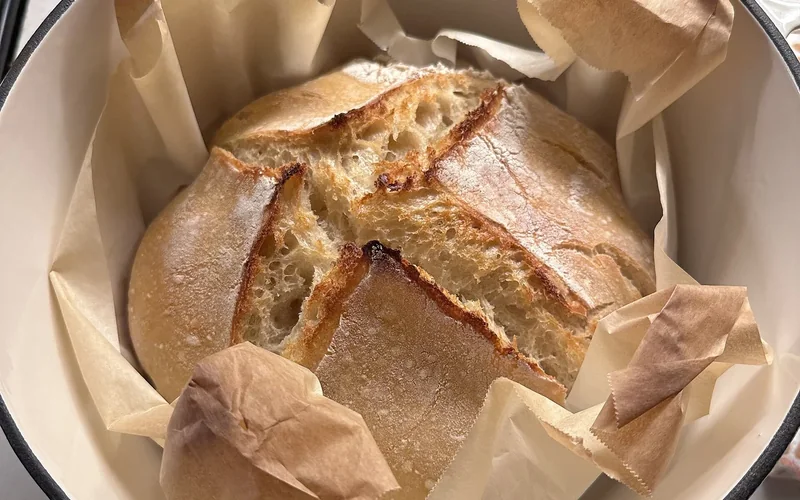
The Dutch Oven Method Has No Literature, Only Physics
A lidded pot traps the loaf's own water and turns it into a heat delivery system. Every step of that explanation rests on a published measurement. The method as a whole has never been tested.
Read story
Oven and Tool
The Dutch Oven Method Has No Literature, Only Physics
A lidded pot traps the loaf's own water and turns it into a heat delivery system. Every step of that explanation rests on a published measurement. The method as a whole has never been tested.
 Read story
Oven and Tool
Why Two Ovens at the Same Temperature Bake Differently
Set two ovens to the same number and they will not produce the same loaf. The reason is that temperature describes a condition while baking depends on a rate, and the rate is split across four paths in proportions that vary by design.
Read story
Oven and Tool
Why Two Ovens at the Same Temperature Bake Differently
Set two ovens to the same number and they will not produce the same loaf. The reason is that temperature describes a condition while baking depends on a rate, and the rate is split across four paths in proportions that vary by design.
 Read story
Oven and Tool
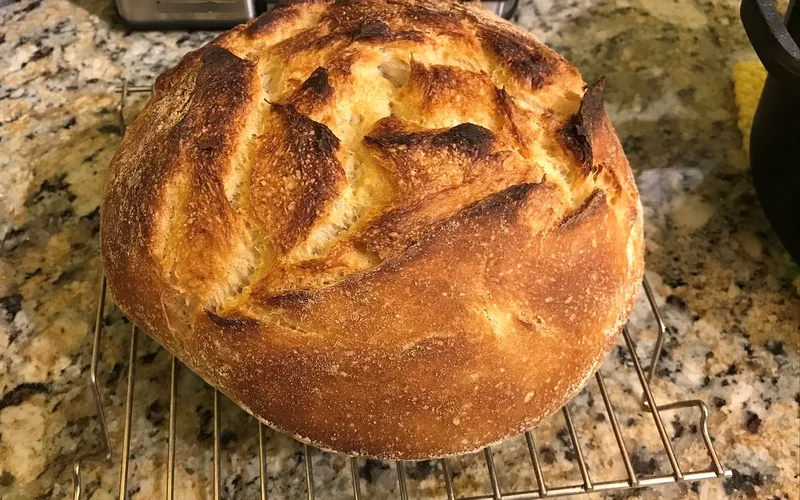
Crust Browning: A Reaction That Multiplies Tenfold Every Few Degrees
One published measurement gives browning a temperature sensitivity of eight degrees for a tenfold change in rate. That figure is the difference between a crust and a burnt top, and it explains why wet surfaces behave so unpredictably.
Read story
Oven and Tool
Crust Browning: A Reaction That Multiplies Tenfold Every Few Degrees
One published measurement gives browning a temperature sensitivity of eight degrees for a tenfold change in rate. That figure is the difference between a crust and a burnt top, and it explains why wet surfaces behave so unpredictably.
 Read story
Oven and Tool
Kitchen Scales and Thermometers: Where the Standards Stop Applying
The tolerance tables that make commercial scales trustworthy do not apply to the one on your counter. And the handiest thermometer in a baker's drawer has its largest error in precisely the temperature range a crust occupies.
Read story
Oven and Tool
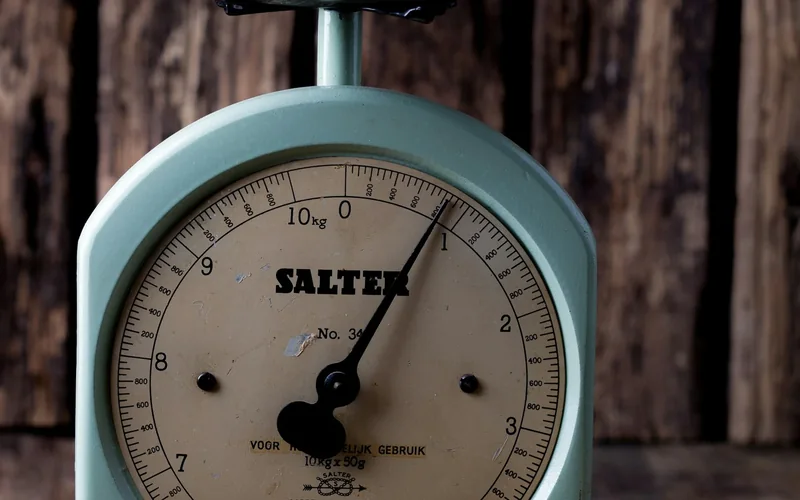
Kitchen Scales and Thermometers: Where the Standards Stop Applying
The tolerance tables that make commercial scales trustworthy do not apply to the one on your counter. And the handiest thermometer in a baker's drawer has its largest error in precisely the temperature range a crust occupies.
 Read story
Read story
Oven and Tool
Commercial Steam Injection: What Bread-Oven Manuals Specify
Steam in a commercial deck oven is not simply a tray of water. Manuals describe a designed system with jets, supply conditions and model-specific installation requirements; those details matter more than a universal timer.
Read story
Oven and Tool
High-Altitude Bread Baking: What Lower Pressure Changes
At elevation, gas expands under lower atmospheric pressure and water boils at a lower temperature. Those physical changes matter to bread, but the baker's climate, flour and process determine what adjustments are useful.
Read story
Oven and Tool
Wood-Fired Ovens: What Thermal Mass Does and What It Does Not
A masonry oven's floor barely moves in temperature while a pizza bakes on it. That stability is the point of thermal mass, and it is one of the few things about these ovens that has actually been measured.
Read story
Oven and Tool
Steam in a Home Oven: A Fourth Heat Path, and a Seven-Minute Window
Steam is usually explained as something that keeps the crust soft. Measured heat budgets suggest a blunter reason it works: condensing water delivers heat by a route that dry air cannot.
Read story
Oven and Tool
Baking Stone or Baking Steel: The Property That Matters Is Not Conductivity
Steel's conductivity advantage over refractory is enormous and largely beside the point. The number that governs contact heating is a different one, and even it runs into a hard ceiling at the dough base.
Read story
Oven and Tool
The Dutch Oven Method Has No Literature, Only Physics
A lidded pot traps the loaf's own water and turns it into a heat delivery system. Every step of that explanation rests on a published measurement. The method as a whole has never been tested.
Read story
Oven and Tool
Why Two Ovens at the Same Temperature Bake Differently
Set two ovens to the same number and they will not produce the same loaf. The reason is that temperature describes a condition while baking depends on a rate, and the rate is split across four paths in proportions that vary by design.
Read story
Oven and Tool
Crust Browning: A Reaction That Multiplies Tenfold Every Few Degrees
One published measurement gives browning a temperature sensitivity of eight degrees for a tenfold change in rate. That figure is the difference between a crust and a burnt top, and it explains why wet surfaces behave so unpredictably.
Read story
Oven and Tool
Kitchen Scales and Thermometers: Where the Standards Stop Applying
The tolerance tables that make commercial scales trustworthy do not apply to the one on your counter. And the handiest thermometer in a baker's drawer has its largest error in precisely the temperature range a crust occupies.
Read story