Food Heritage
Bread as it survives in archives, museums, and public records.
Food Heritage follows bread through assize records, guild documents, communal ovens, stamped loaves, famine substitutes, and museum collections, always naming the holding institution.
10 articles
Food Heritage
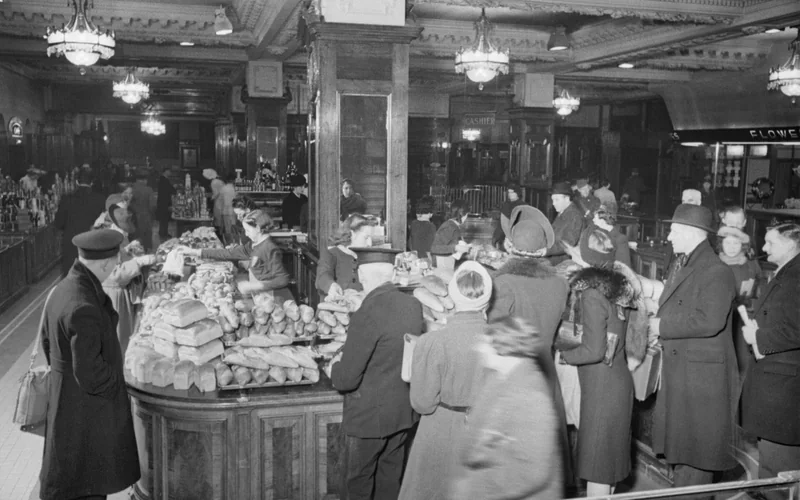
The National Loaf: Wartime Standardisation in the Record
The National Loaf is often remembered as a single wartime formula. Hansard instead preserves dated answers that let us see both what was specified and how the account changed over time.
 Read story
Food Heritage
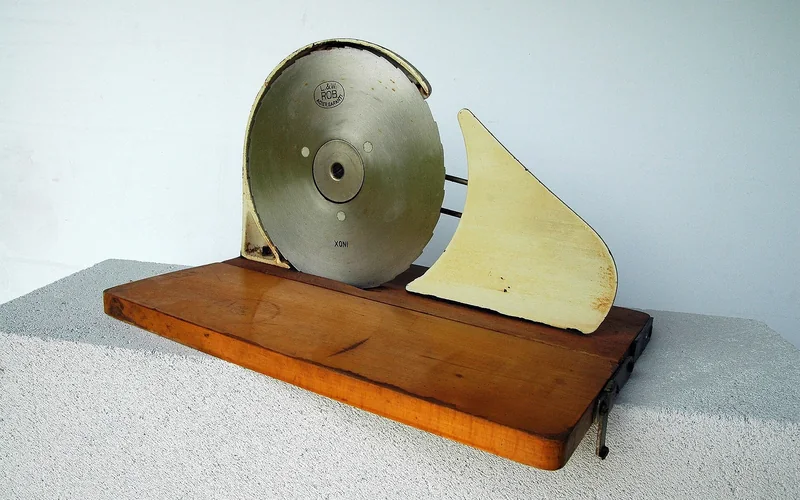
The Sliced Loaf: What the Rohwedder Machine and Patent Actually Show
Sliced bread is often reduced to an inventor and a memorable slogan. The patent and museum record show a more grounded story: a mechanical solution, a bakery installation and a gradual change in how loaves were sold.
Read story
Food Heritage
The Sliced Loaf: What the Rohwedder Machine and Patent Actually Show
Sliced bread is often reduced to an inventor and a memorable slogan. The patent and museum record show a more grounded story: a mechanical solution, a bakery installation and a gradual change in how loaves were sold.
 Read story
Food Heritage
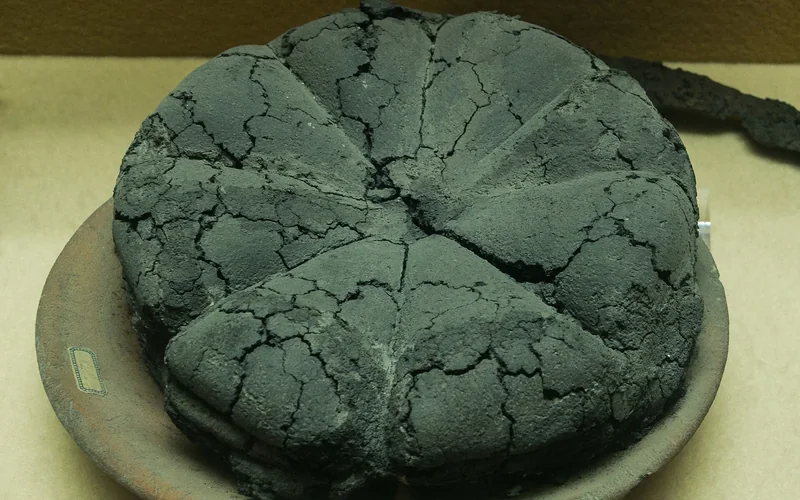
What Museums Actually Hold About Bread
Bread is a poor survivor, so what museums catalogue is everything adjacent to it: moulds, models of bakeries, figures caught in the act of baking, and the scales used to check whether a loaf was honest.
Read story
Food Heritage
What Museums Actually Hold About Bread
Bread is a poor survivor, so what museums catalogue is everything adjacent to it: moulds, models of bakeries, figures caught in the act of baking, and the scales used to check whether a loaf was honest.
 Read story
Food Heritage
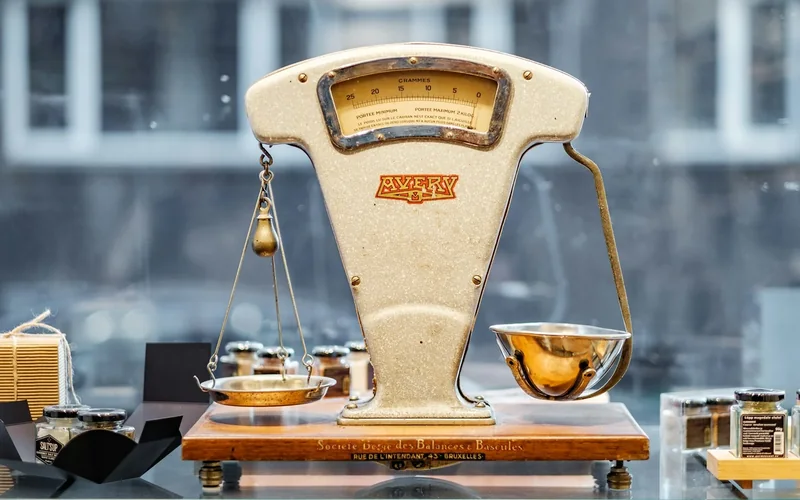
The Assize of Bread Survives as Paperwork, Not as Statute
A 1281 document at Canterbury, a 1638 printed table of loaf weights, and town books running to 1836: the administration of England's bread law is far better documented than the law itself.
Read story
Food Heritage
The Assize of Bread Survives as Paperwork, Not as Statute
A 1281 document at Canterbury, a 1638 printed table of loaf weights, and town books running to 1836: the administration of England's bread law is far better documented than the law itself.
 Read story
Food Heritage
The Communal Oven Was a Legal Right Before It Was a Building
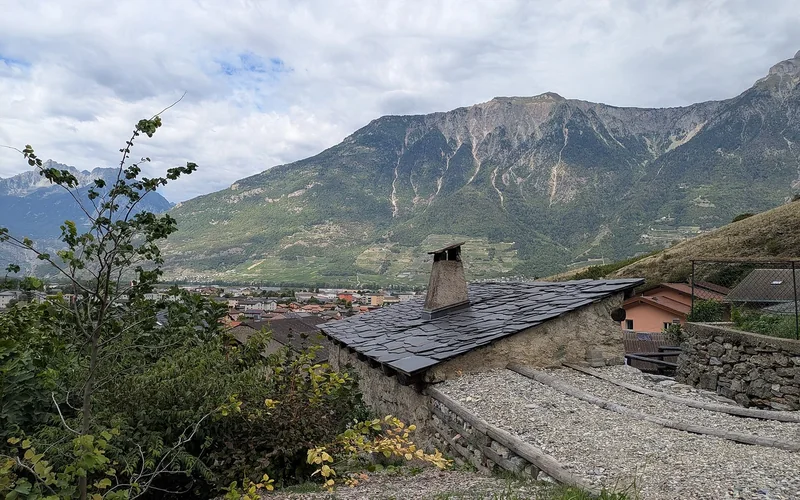
What survives of the shared village oven is not architecture but litigation. Two seventeenth-century court briefs show villagers and a landholder arguing over who was obliged to use whose oven, and the argument was already centuries old.
Read story
Food Heritage
The Communal Oven Was a Legal Right Before It Was a Building
What survives of the shared village oven is not architecture but litigation. Two seventeenth-century court briefs show villagers and a landholder arguing over who was obliged to use whose oven, and the argument was already centuries old.
 Read story
Food Heritage
Bread Stamps: One Object Type Across Fourteen Centuries
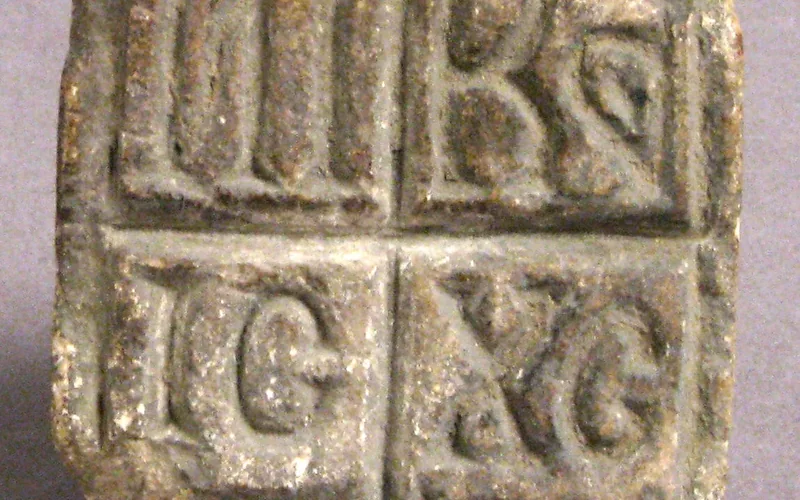
A Byzantine ceramic stamp, four tenth-century earthenware seals acquired together in 1927, and carved wooden stamps from the nineteenth century: the same tool, made repeatedly, for reasons that were not always the same.
Read story
Food Heritage
Bread Stamps: One Object Type Across Fourteen Centuries
A Byzantine ceramic stamp, four tenth-century earthenware seals acquired together in 1927, and carved wooden stamps from the nineteenth century: the same tool, made repeatedly, for reasons that were not always the same.
 Read story
Food Heritage
Bark Bread Is Well Known and Poorly Sourced
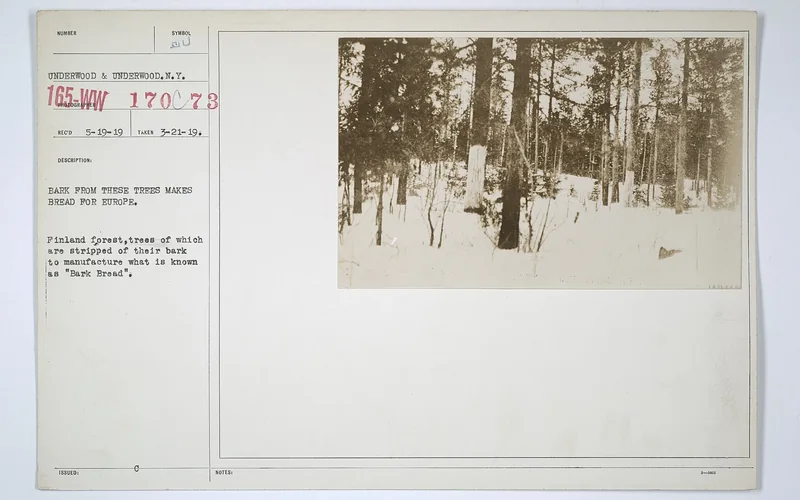
Two scientific periodicals each ran a notice headed Bark Bread within seven weeks of each other in 1886. Working out what that bread actually was, from sources a reader can check, turns out to be a different task entirely.
Read story
Food Heritage
Bark Bread Is Well Known and Poorly Sourced
Two scientific periodicals each ran a notice headed Bark Bread within seven weeks of each other in 1886. Working out what that bread actually was, from sources a reader can check, turns out to be a different task entirely.
 Read story
Food Heritage
Four Layers of Grain Record, and What Each Can Answer
There is no single archive of what people grew and ate. There are four distinct kinds of record, produced for four different purposes, and knowing which one to open saves a great deal of wasted effort.
Read story
Food Heritage
Four Layers of Grain Record, and What Each Can Answer
There is no single archive of what people grew and ate. There are four distinct kinds of record, produced for four different purposes, and knowing which one to open saves a great deal of wasted effort.
 Read story
Food Heritage
What Baker Guild Archives Actually Record
A 1516 statute from Toulouse, apprentice certificates naming individual men in Coventry between 1699 and 1726, and a recorded fine for betraying the company's secrets. Guild archives are about control, membership and money.
Read story
Food Heritage
What Baker Guild Archives Actually Record
A 1516 statute from Toulouse, apprentice certificates naming individual men in Coventry between 1699 and 1726, and a recorded fine for betraying the company's secrets. Guild archives are about control, membership and money.
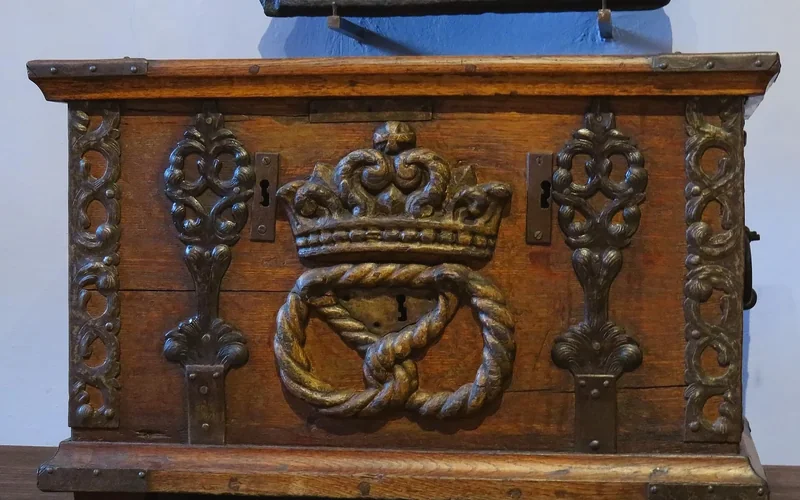 Read story
Food Heritage
Feeding a City Was a Logistics Problem With a Legal Interface
In 1379 a count granted Bruges permission to dig a canal for importing grain, and a six-year war followed. Four and a half centuries later on another continent, flour was still being taxed at the city gates.
Read story
Food Heritage
Feeding a City Was a Logistics Problem With a Legal Interface
In 1379 a count granted Bruges permission to dig a canal for importing grain, and a six-year war followed. Four and a half centuries later on another continent, flour was still being taxed at the city gates.
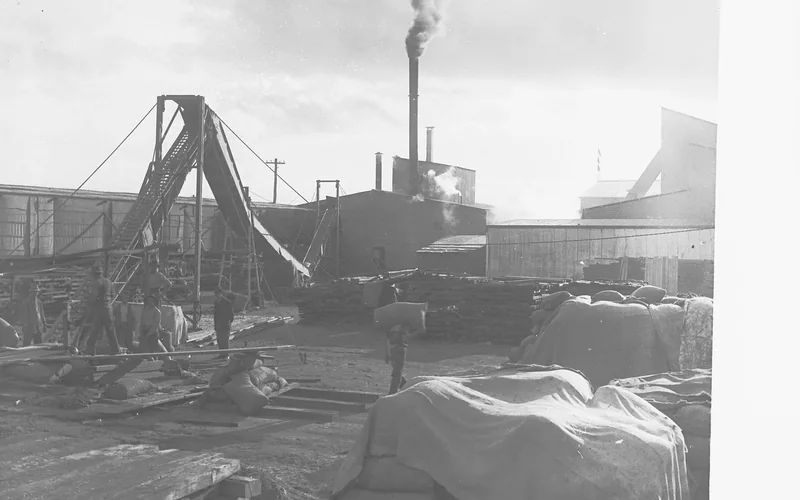 Read story
Read story
Food Heritage
The Sliced Loaf: What the Rohwedder Machine and Patent Actually Show
Sliced bread is often reduced to an inventor and a memorable slogan. The patent and museum record show a more grounded story: a mechanical solution, a bakery installation and a gradual change in how loaves were sold.
Read story
Food Heritage
What Museums Actually Hold About Bread
Bread is a poor survivor, so what museums catalogue is everything adjacent to it: moulds, models of bakeries, figures caught in the act of baking, and the scales used to check whether a loaf was honest.
Read story
Food Heritage
The Assize of Bread Survives as Paperwork, Not as Statute
A 1281 document at Canterbury, a 1638 printed table of loaf weights, and town books running to 1836: the administration of England's bread law is far better documented than the law itself.
Read story
Food Heritage
The Communal Oven Was a Legal Right Before It Was a Building
What survives of the shared village oven is not architecture but litigation. Two seventeenth-century court briefs show villagers and a landholder arguing over who was obliged to use whose oven, and the argument was already centuries old.
Read story
Food Heritage
Bread Stamps: One Object Type Across Fourteen Centuries
A Byzantine ceramic stamp, four tenth-century earthenware seals acquired together in 1927, and carved wooden stamps from the nineteenth century: the same tool, made repeatedly, for reasons that were not always the same.
Read story
Food Heritage
Bark Bread Is Well Known and Poorly Sourced
Two scientific periodicals each ran a notice headed Bark Bread within seven weeks of each other in 1886. Working out what that bread actually was, from sources a reader can check, turns out to be a different task entirely.
Read story
Food Heritage
Four Layers of Grain Record, and What Each Can Answer
There is no single archive of what people grew and ate. There are four distinct kinds of record, produced for four different purposes, and knowing which one to open saves a great deal of wasted effort.
Read story
Food Heritage
What Baker Guild Archives Actually Record
A 1516 statute from Toulouse, apprentice certificates naming individual men in Coventry between 1699 and 1726, and a recorded fine for betraying the company's secrets. Guild archives are about control, membership and money.
Read story
Food Heritage
Feeding a City Was a Logistics Problem With a Legal Interface
In 1379 a count granted Bruges permission to dig a canal for importing grain, and a six-year war followed. Four and a half centuries later on another continent, flour was still being taxed at the city gates.
Read story