Oven spring is often described as if the loaf were simply continuing to rise, only faster. A 2021 review of oven rise sets out a more useful account, in which expansion is a contest between an increasing internal pressure and an outer layer that is progressively losing the ability to stretch.
The driving side
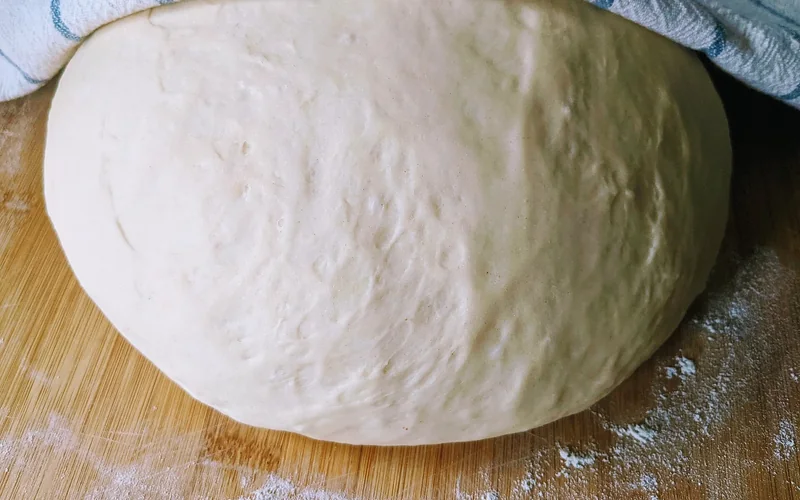
The review identifies gas pressure as the driving force. Dough entering the oven contains gas cells that are not connected to each other, filled principally with carbon dioxide produced by the yeast during fermentation. As temperature rises, that gas expands, dissolved carbon dioxide comes out of solution, and water begins to vaporise, all of which raises the pressure inside the cells.
Several experimental studies, the review notes, report a rapid increase in overall volume early in baking. That is the pressure winning, while the surrounding material can still be deformed.
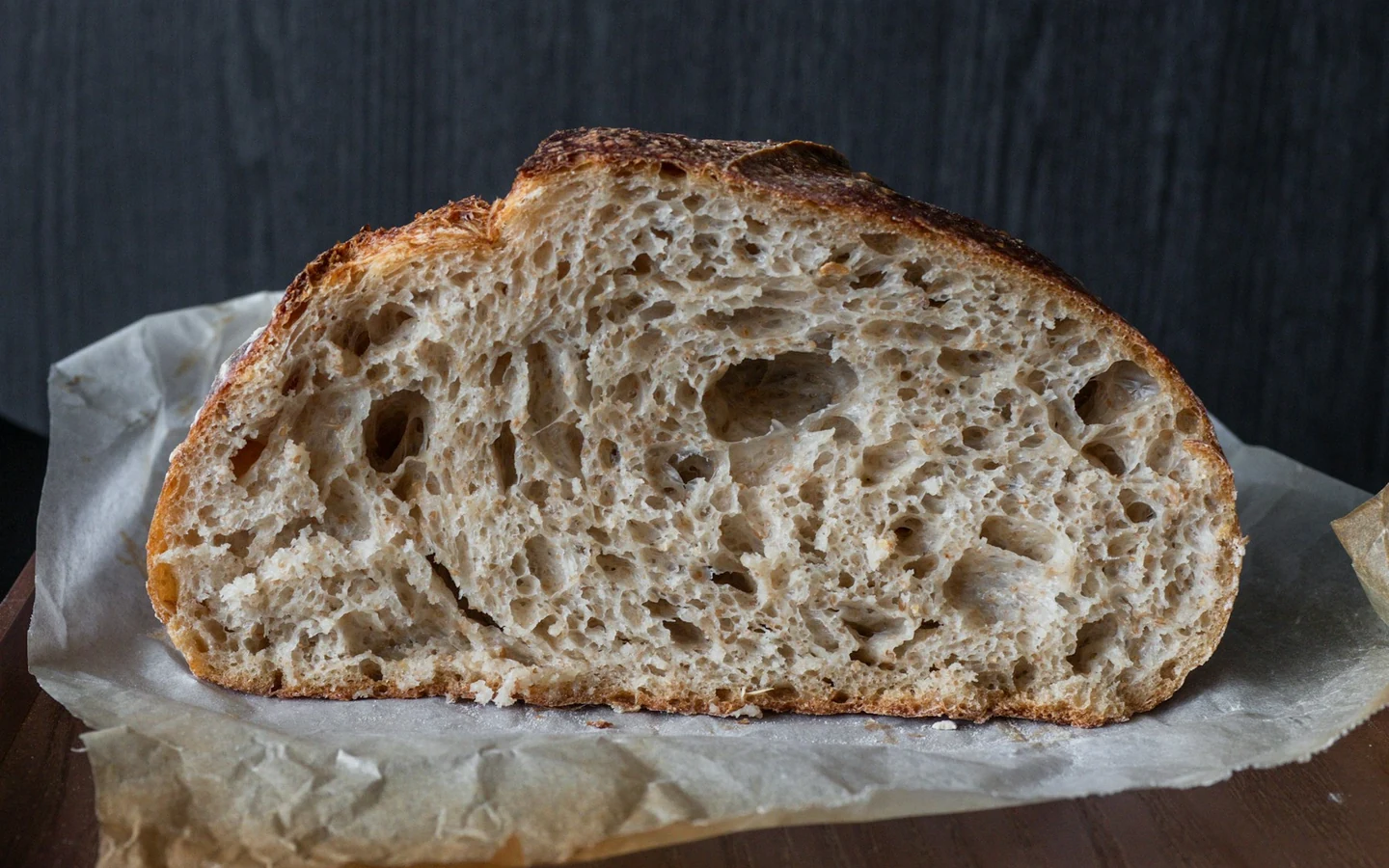
As the cells enlarge they come into contact with one another and the gas begins to interconnect. Porosity rises. This is the point at which the crumb's eventual architecture is being determined: which cells merged, which walls thinned, and where the structure will end up open or fine.
The constraining side
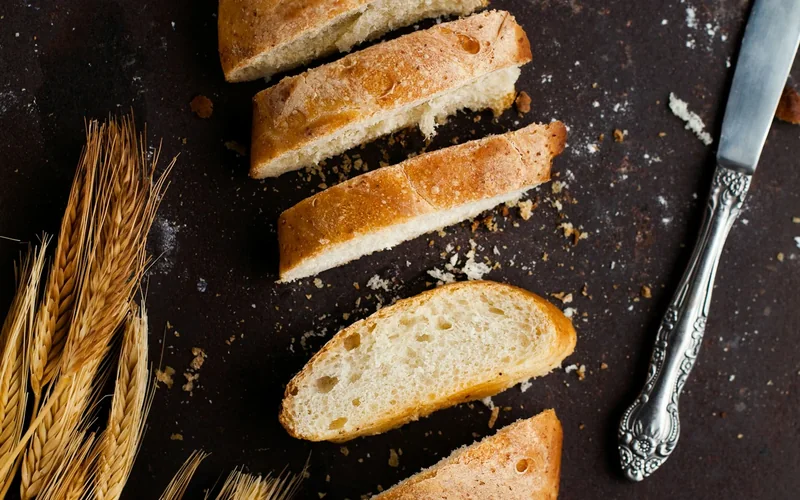
Simultaneously, the surface is drying. Once a dehydrated crust has formed, the review states, deformation is constrained by the rigid outer structure, and it notes this is particularly pronounced in traditional baguette-type products.
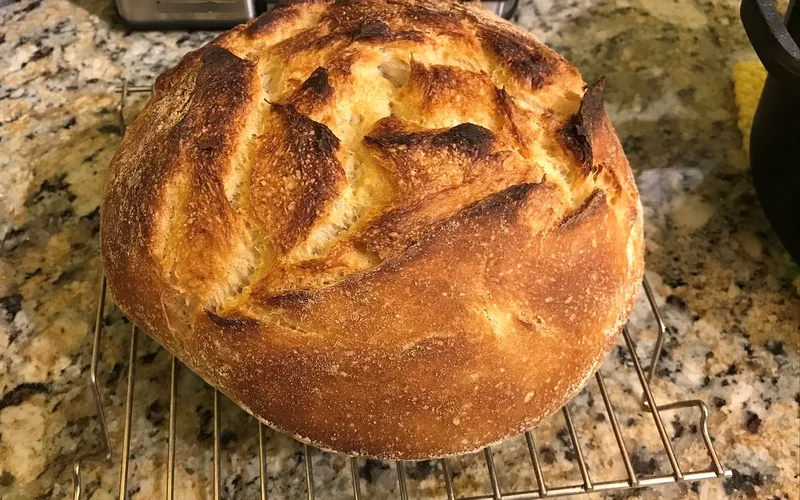
That single sentence explains a great deal about loaf shape. A stiff shell cannot expand, so continued internal pressure must either find somewhere else to go or be resisted. The place it goes is wherever the shell is thinnest or weakest.
It also explains why long thin loaves show the effect most. A baguette has a large surface area relative to its volume, so it dries faster and forms its constraining layer sooner, while it also has proportionally more surface for that layer to resist across.
When each side wins, in numbers
A 2025 study of temperature evolution supplies the timing and the temperatures.
Dough viscosity turns from fluid towards solid at around 50 degrees Celsius. The calorimetric starch gelatinisation peak sits at 76.0 degrees, with pores opening and connecting between 71 and 81. Full setting occurs at around 110 degrees, and the interior holds at a 100 degree plateau throughout.
On timing, lateral height stabilised at about 450 seconds while central height continued to roughly 900 seconds before settling. So the sides stop moving at around seven and a half minutes and the top continues for about fifteen.
Read against the constraint mechanism, that sequence makes sense. The sides are surfaces: they dry first, form their rigid layer first, and stop. The central axis is furthest from the surface and continues to rise while its surroundings still yield.
One discrepancy is worth flagging rather than smoothing over. The 2021 review places gelatinisation at around 60 degrees, while the 2025 study's calorimetric peak is 76.0. Those are different measurements. A gelatinisation onset in a real dough, where water is limited and competing for by other components, is not the same as a peak temperature measured on starch in excess water. Both numbers can be correct for what they describe.
The surface temperature complication
How fast the constraining layer forms depends on how fast the surface dries, and that varies more than expected.
A 2023 study measured the upper surface temperatures of three products baked simultaneously and found 182, 84 and 67 degrees Celsius, attributing the differences to water content and emissivity. A surface holding near 84 degrees is still evaporating and still wet; a surface at 182 has dried and is heating freely.
Applied to bread, this means the constraining layer does not form on a schedule. A surface kept wet, whether by steam in the oven or by its own moisture, stays extensible longer, and expansion continues.
That is the mechanism behind steaming, stated from the constraint side rather than the heat-transfer side: steam does not add lift, it postpones the formation of the shell that stops lift.
What this says about scoring
Cutting the surface before baking is universally practised and is explained in exactly these terms: the cuts give the expanding interior a place to open, rather than forcing it to rupture the shell somewhere unpredictable.
That explanation is consistent with everything above. It is also, as far as accessible literature goes, untested. I searched for controlled studies varying cut depth, angle, or pattern and measuring volume or shape, and found none. The mechanistic case rests on the crust constraint findings in the 2021 review rather than on any experiment about scoring itself.
So the honest formulation is that scoring addresses a documented constraint by a plausible route, and that no published measurement quantifies what it achieves.
What follows for practice
The timings above give the useful boundaries.
Interventions that matter for volume have to act within the first several minutes, because lateral setting is complete at around 450 seconds. Anything done later affects colour and crust, not height.
Keeping the surface wet extends the window, and the 67 to 182 degree spread in measured surface temperatures shows how much difference surface moisture makes to how quickly a surface can start behaving like a shell.
Drying the surface is what you want once expansion is done, which is why venting or uncovering partway through is not a compromise but a change of objective.
And the loaf's geometry sets its own limits. A high surface-to-volume shape forms its constraining layer sooner, which the review identifies directly in baguette-type products, and no amount of steam entirely removes that difference. A round loaf of the same dough weight has less surface to dry and therefore a longer window in which to expand.