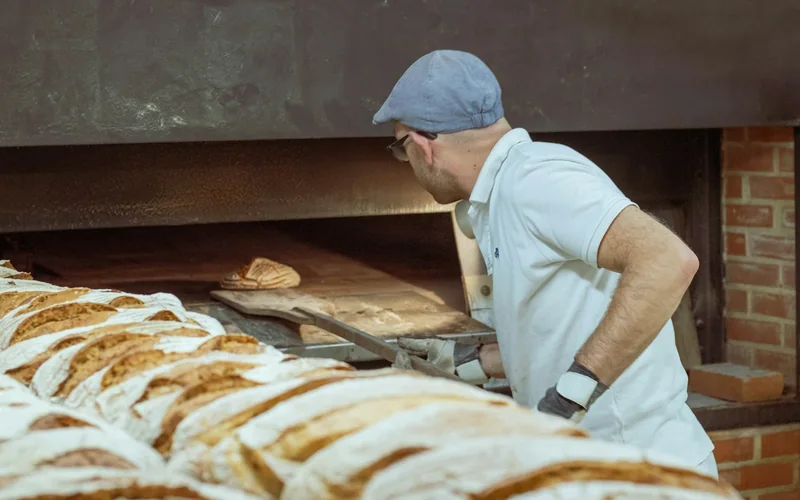
Steam is often described as a baking effect: it keeps the crust flexible, helps a loaf expand and contributes to a particular surface finish. In a commercial oven, however, steam injection is also a piece of engineered equipment. The manufacturer's manual describes a specific system: optional jets, supply conditions, condensate management and installation details. Those details are more useful than copying a timing rule from a different oven.
The Blodgett 900-series manual describes steam-jet equipment for a particular family of deck ovens. A peer-reviewed bread steam-injection study examines oven and bread responses under a defined experimental setup. One source is operational documentation for a product line; the other is a study. Neither can establish a setting for every commercial oven.
Steam injection is a system
In an equipped deck oven, steam may be delivered through designed jets into the baking chamber. The system depends on the oven's water supply, pressure, valves and installation. The manual's model-specific requirements matter because a steam circuit must operate within the manufacturer's design. A generic instruction such as “add a cup of water” describes a different process and is not interchangeable with a built-in steam system.
The steam generated in a hot chamber can condense on cooler dough surfaces. That condensation affects heat and moisture exchange at the surface. It is part of the early bake, when the dough expands and the crust has not yet fully set. The exact effect depends on steam quantity, timing, oven temperature, dough surface condition and the geometry of the chamber.
This does not mean steam alone determines oven spring or crust thickness. Gas retention, dough maturity, scoring, loaf size, hearth temperature and bake duration all contribute. Steam is one stage in a process, and its contribution cannot be read from the final crust alone.
What the 900-series manual documents
The Blodgett manual covers the 900-series ovens, not commercial ovens as a category. It identifies steam jets as an option and gives requirements associated with the equipment. Its instructions address the designed supply and installation, including low-pressure conditions and separation or handling of condensate. Such requirements protect operation and help the system deliver steam as intended.
Manuals answer a different question from recipe articles. They tell an operator or installer what the manufacturer specifies for a model. They do not prove that a given steam setting produces a particular bread quality. They also do not authorize a user to modify plumbing or electrical systems beyond the stated procedures. The owner's manual should be matched to the exact oven configuration and local code requirements.
This level of model specificity is easy to lose in online advice. A bakery may own a deck oven with jets, a rack oven, a convection oven or a hybrid system. Their steam delivery, chamber size and controls differ. Even within one manufacturer's range, optional features and installation can vary. The manual's model number and configuration are part of the evidence.
What controlled studies measure
The 2011 Journal of Food Engineering study varied steam input in a defined deck-oven experiment. Its conditions included a measured amount delivered to a known oven area, and the researchers examined outcomes such as oven conditions and bread properties. That is evidence about the tested arrangement. It is not a universal target for a commercial bakery with a different chamber, load or steam generator.
Controlled studies are useful because they make variables explicit. A paper can state how much steam was introduced, when it was introduced, what dough was baked and which outcomes were measured. Readers can then see what the results support. If loaf volume changed under those conditions, that does not establish the same change for every recipe or oven.
The distinction between oven response and bread response also matters. A sensor can measure chamber temperature or humidity near a location. A bread sample can be assessed for volume, moisture or crust properties. These are connected outcomes, but a change in one does not automatically quantify the other. Sensor placement, oven loading and calibration affect the interpretation.
Why numbers do not transfer cleanly
A steam quantity reported in millilitres is not a complete setting. The relevant oven volume, chamber leakage, steam generation method, injection timing and load affect how that amount behaves. A deck area gives useful context, but even two ovens with similar deck dimensions may differ in mass, insulation and ventilation.
Oven loading changes the thermal and moisture balance. Cold dough absorbs heat; openings allow steam to escape; repeated bakes alter chamber conditions. A measurement made in an empty chamber may not match a loaded bake. A batch of several loaves can interact with itself and the oven in ways that one test loaf does not capture.
For that reason, do not convert a paper's experimental setting into a recommended bakery schedule without testing. Similarly, a manual's pressure requirement is a hardware condition, not a proofing or crust formula. Keep equipment specifications, experimental results and bakery process decisions in their proper categories.
Steam and crust development
During the early bake, steam condensing at the dough surface adds moisture and can delay surface drying. A flexible surface may permit expansion before the crust becomes rigid. As baking continues, the surface loses moisture, browns and becomes crisp. The timing and degree of those changes depend on the entire thermal profile.
More steam is not automatically better. Too much moisture or a poorly timed release can affect crust character and bake performance. The desired finish differs among breads: a thin crisp crust, a shiny loaf, a blistered surface or a soft roll may call for different process targets. Steam should be chosen for the product, not maximized in isolation.
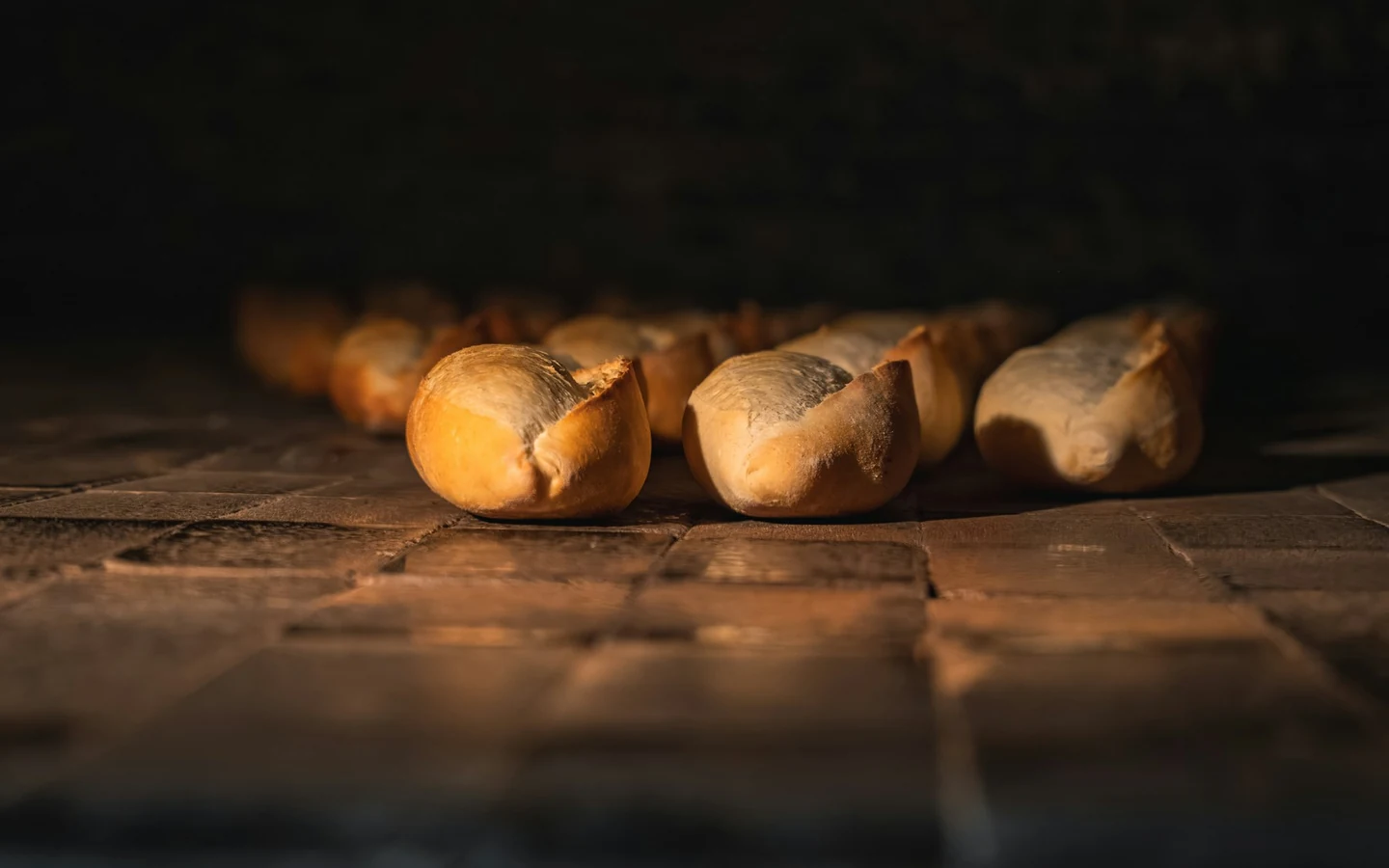
The loaf's surface itself complicates observation. Flour dusting, scoring depth, fat, sugar and fermentation affect the appearance. A glossy crust may be associated with steam but cannot prove how a system was operated. A photograph is not process documentation.
Operating and maintaining the oven
Commercial steam equipment should be operated according to the exact manufacturer instructions. Water quality, pressure and condensate can influence the equipment and require maintenance. An operator should consult the correct manual and qualified service personnel for installation or troubleshooting rather than improvising around a line or valve.
This article does not provide a retrofit guide. The Blodgett source describes its own system and model family. Other manufacturers may specify different hardware and pressures. Local building codes, water treatment, electrical requirements and workplace procedures may also apply.
For any installation decision, identify the exact oven model and consult the corresponding manufacturer's documentation. A general description of steam's effect on bread cannot establish a particular unit's supply requirements, approved fittings, maintenance schedule or safe operating procedure.
How a bakery can test a process
If a bakery is evaluating steam, begin by identifying the oven and configuration, then verify that the equipment is functioning as specified. Record the product, dough condition, loading pattern, chamber settings, steam timing and bake duration. Change one controllable variable at a time and compare repeat batches.
Measure the outcome that matters. If the concern is crust appearance, photograph samples under consistent light and cooling time. If the concern is expansion, use a repeatable volume measurement. If the question is bake consistency, record dough temperature and oven conditions across multiple positions. Notes about “more steam seemed better” are a starting observation, not a verified process standard.
Research methods can help design a comparison, but commercial production has constraints that a laboratory may not share. A bakery may need to balance quality, cycle time, cleaning and consistency. The best operational setting is one that works reliably on that equipment and product while meeting safety and manufacturer requirements.
Read the model before the timer
Commercial steam injection is not an abstract feature. It is a system built into a particular oven, with specifications and operating boundaries. The Blodgett manual shows the kind of information available for one series; a controlled paper shows how steam can be evaluated under defined test conditions.
Before copying a number, ask what oven it came from, how the steam was generated and which bread outcome was measured. That context turns a setting into evidence. Without it, a timer or volume is detached from the machinery that made it meaningful.