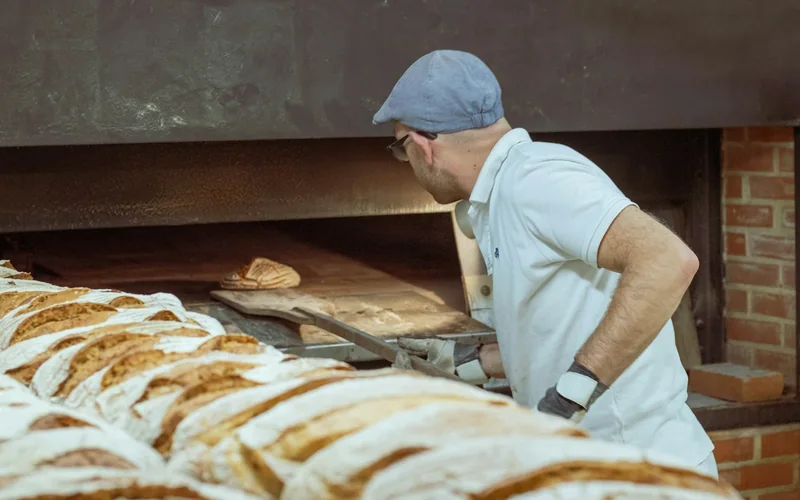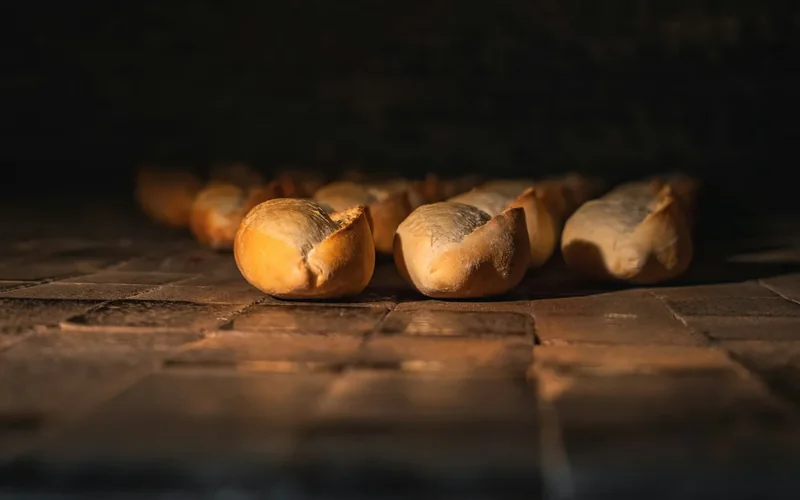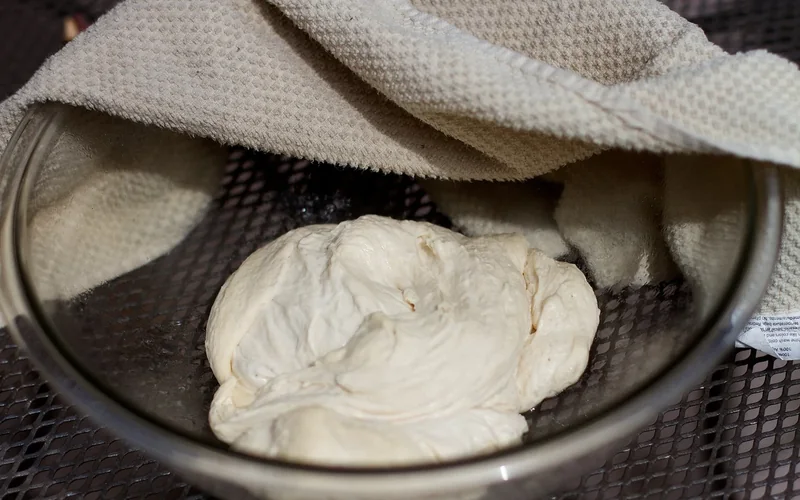
Bread baked at elevation may behave differently because atmospheric pressure is lower. Gas bubbles in dough experience less outside pressure and can expand more readily. Water also boils at a lower temperature as elevation rises, changing the thermal conditions during baking. These physical effects are real, but they do not produce one universal “altitude formula” for every loaf.
Extension guides from Colorado State University and New Mexico State University offer practical guidance for bakers. They are useful starting points, not controlled bread trials that guarantee the same adjustment for every flour or oven. Their recommendations need to be read alongside the recipe, local climate and dough behavior.
Pressure changes the way gas expands
Yeast fermentation produces carbon dioxide, which dissolves partly in dough and partly collects in gas cells. The dough's structure stretches around those cells. At lower atmospheric pressure, the gas inside a cell can expand more for a given difference between its internal and external pressure. A dough that reaches the same fermentation state at sea level may therefore expand more quickly at elevation.
This can affect proofing and oven spring. If the dough expands faster than its structure can support, it may overproof, spread or collapse. The appropriate response is not always to reduce yeast by a fixed amount. Fermentation time, dough temperature, starter strength, shaping tension and flour quality all contribute. Some bakers may find that a shorter final proof is enough; others may need to adjust formula or handling.
The effect also depends on how high the bakery is and on its process. “High altitude” covers a range of elevations, and a change that matters at one location may be small at another. A recommendation written for cakes cannot automatically be applied to lean bread dough, whose fermentation, gluten structure and handling differ.
Water boils at a lower temperature
At elevation, the surrounding air pressure is lower, so water reaches its boiling point at a lower temperature than it does at sea level. This affects the boiling behavior of water and can change how quickly heat reaches a wet dough surface. It is one reason baking guidance treats altitude as more than just a proofing issue.
The crust and crumb develop through several overlapping processes: heat transfer, evaporation, starch gelatinization, protein setting and browning reactions. Lower boiling temperature does not mean every loaf needs a simple oven-temperature increase. Oven calibration, preheat stability, loaf size, pan or stone material, steam and bake duration also shape the result.
For bread, the center still needs sufficient time and heat to set. If a loaf browns before the crumb is fully baked, a baker may need to adjust the baking profile. But a dark crust can have several causes, including sugar, malt, oven position and top heat. Diagnose the loaf before attributing the outcome to elevation alone.
Climate and pressure are separate variables
Many elevated regions also have dry air, but low humidity is a climate feature, not a direct consequence of altitude in every place. Dry air can increase evaporation from exposed dough and flour. Flour stored in a dry room may also have a different moisture content from flour in a humid kitchen, changing how a familiar recipe feels.
This is one reason advice from extension services may differ. Colorado and New Mexico cover distinct climates and elevations, and their practical recommendations reflect local experience as well as general baking physics. A baker in a humid mountain valley and a baker in a dry high desert may not face the same dough-surface drying or flour-storage conditions.
Keep dough covered during rests and proofing so the surface does not dry. If a dough feels unusually stiff, check flour type, storage and measurement before adding a large amount of water. Gradual adjustments let the baker account for the actual batch. “Add more water because of altitude” is not a reliable rule in all conditions.
Yeast and proofing need observation
At lower pressure, gas expansion may make proofing proceed differently even if yeast activity itself is not faster. A dough can appear fuller sooner because bubbles occupy more volume. The distinction matters: fermentation produces gas, while pressure influences the volume that gas occupies.
A baker who responds only by cutting proof time may still miss other variables. Dough temperature, inoculation percentage, flour strength and shaping affect readiness. Use more than the clock: volume change, surface tension, response to a gentle touch and the recipe's intended bake point all help.
Some extension recommendations suggest changes to leavening for certain baked products. Those adjustments should not be treated as a universal bread prescription. A large enriched loaf, a lean sourdough boule and a flatbread have different structures and proofing goals. The appropriate correction is the smallest one that addresses an observed failure.
Flour and structure still matter
Pressure can influence expansion, but the dough must still retain the gas. Wheat protein quality, hydration, mixing and fermentation all shape the structure. A weak dough may collapse at sea level as well as at elevation; lower pressure can make a marginal structure more noticeable but does not cause every failure.
Whole-grain particles, rye flour and high hydration alter dough behavior in their own ways. A recipe built around strong white wheat flour may not transfer to a mixed-grain formula simply because both are baked at the same elevation. The flour's water absorption and the desired crumb need to be considered separately from the pressure adjustment.
Temperature is another interaction. A warm kitchen can speed fermentation; a cool room can slow it. A high-altitude recipe that assumes a particular room temperature may not fit a bakery with climate control. Record dough temperature and proof duration so that observations can be compared from bake to bake.
A practical way to tune a recipe
Begin with a known recipe and change one factor at a time. Record location or elevation, room and dough temperature, flour, hydration, fermentation time, proofing endpoint and bake profile. If the dough overexpands, first check whether it was proofed too far. If the crumb remains gummy, check bake completion and cooling. If the surface dries, improve covering and storage before changing the formula.
Make small adjustments and repeat the bake. A single loaf can be affected by shaping, starter activity and oven loading. Repeated results help separate a consistent elevation-related issue from a one-time process variation. For a bakery, a trial log is more useful than copying a generic percentage change from a guide.
Record the elevation and local conditions alongside the formula and process. When comparing results from different kitchens, keep those circumstances attached to each bake: a successful loaf elsewhere does not establish which adjustment will work with your flour, oven and fermentation schedule.
What the extension guides can support
Extension publications translate baking science into workable guidance for their audiences. They can help a baker understand why recipes may need adjustment and suggest where to begin. They should not be mistaken for a universal commercial standard or a guarantee that one formula works in all high-altitude environments.
The Colorado and New Mexico guides both frame altitude as a condition that affects baking, while practical outcomes depend on the product and local context. If their suggested changes differ, that is a cue to compare the recipe types and environments they address rather than choose a single winner.
A place to start, not a fixed formula
Lower pressure can allow gas cells to expand more, and a lower boiling temperature changes the conditions of baking. Dry climate may also affect exposed dough and flour, but dryness and altitude are not synonymous. These mechanisms help explain why a sea-level method may need attention; they do not prescribe a single replacement recipe.
For a baker, the useful approach is to observe the dough, change one variable and keep notes. The physical environment is part of the process, but it joins flour, fermentation, equipment and technique rather than overriding them. A reliable high-altitude loaf comes from tuning a particular bread to a particular kitchen.