When a paper reports how heat moves through a bread oven, the headline can sound universal: radiation, convection, conduction. But measurements come from a particular oven, with a particular load, sensors and run schedule. A static batch oven and a continuous tunnel oven are different systems. The experimental design defines what the data can tell us and how far the conclusions travel.
An Applied Thermal Engineering study of a batch bread oven used measurements and modeling to examine oven behavior. A later industrial tunnel-oven study investigated a continuous high-temperature system. The two papers are useful together because their differences make a central point visible: “commercial bread oven” is not a single equipment category.
What counts as a batch oven
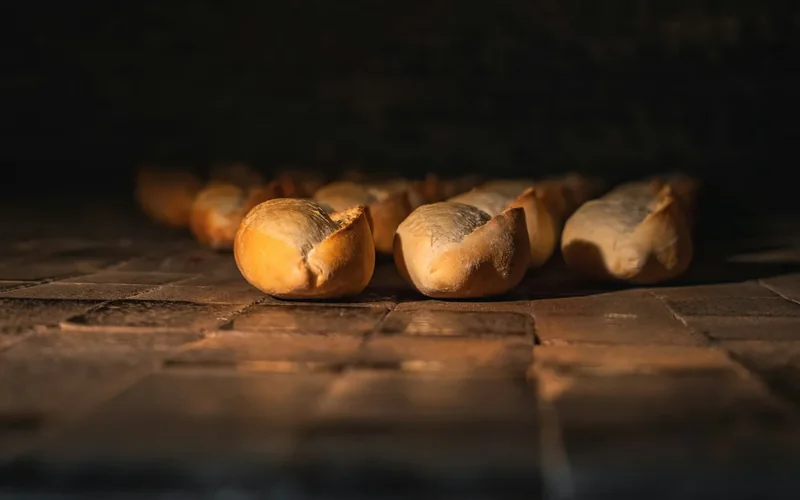
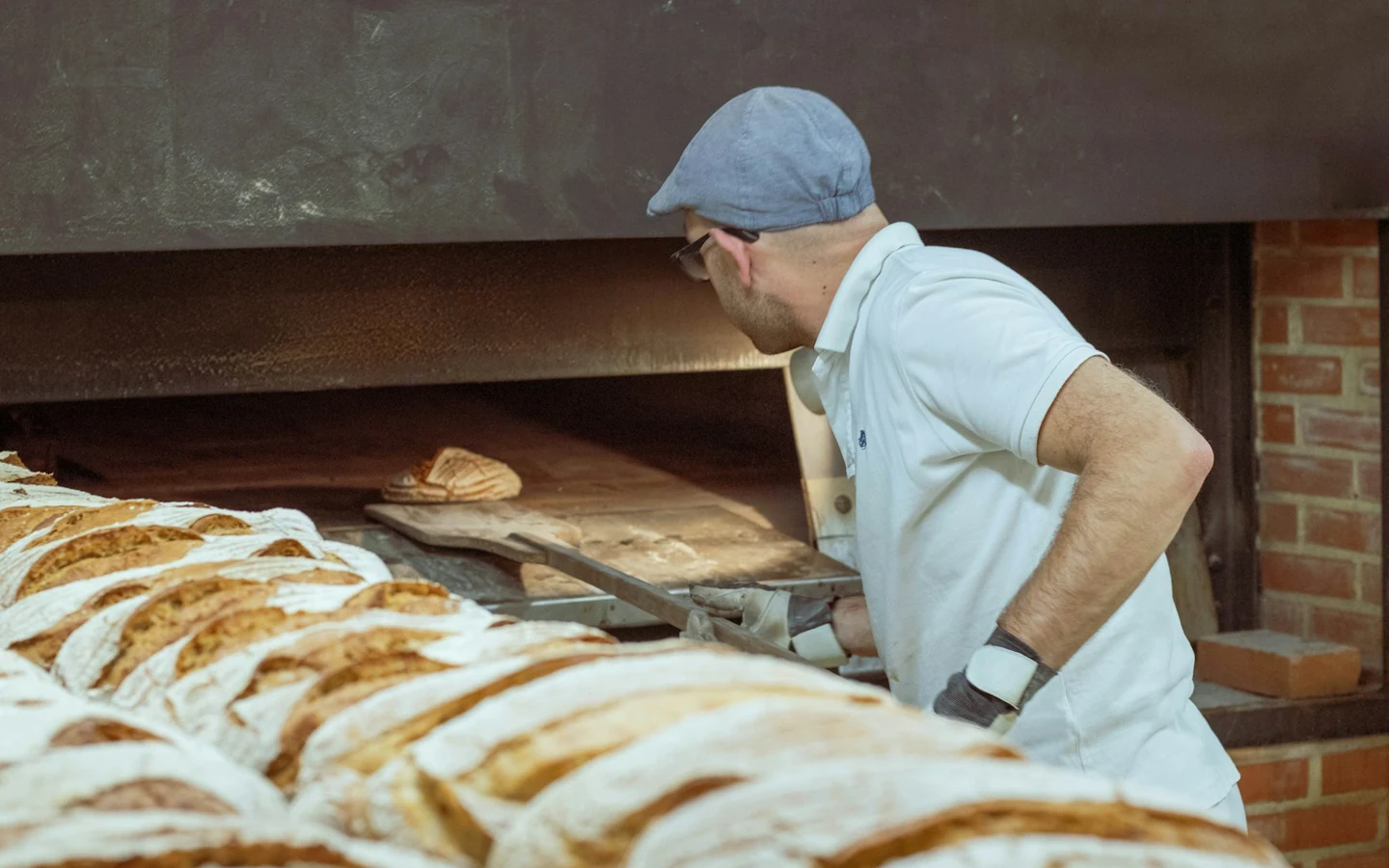
A batch oven holds a load of dough while the bake proceeds. The operator loads the chamber, closes it, bakes for a defined interval and unloads the bread. Deck ovens and some static electric or gas ovens operate this way, though their construction and heat delivery differ. The chamber is not necessarily at one uniform temperature, and the load changes as dough absorbs heat and releases moisture.
A tunnel oven works differently. Products move continuously through heated zones on a belt or other conveyor. The oven's length, zone controls, belt speed and production rate shape the thermal history. A loaf is not loaded into an empty chamber for one isolated batch; the line may operate continuously at a steady throughput.
These differences change both measurement and interpretation. A batch study can observe warm-up, loading disturbance, bake recovery and repeated cycles. A tunnel study may analyze temperature zones and product travel through a continuous system. Combining their numerical results as though they describe the same oven would be a category error.
What researchers measure
Oven studies may record temperatures at multiple locations, heat flux, chamber conditions, surface temperatures and energy input. Sensors have different purposes. A thermocouple measures temperature where its junction sits. A heat-flux sensor estimates energy transfer through a surface. An energy meter can measure electrical consumption. Each instrument answers a defined question, and none automatically describes every point in the chamber.
Sensor placement matters. Near a wall, heating element, exhaust or product surface, conditions can differ from the center of a deck. If a study places a sensor in one location, it can report that location's behavior, not a complete three-dimensional map. Researchers may combine measurement with a thermal model, but the model still depends on its assumptions, boundary conditions and validation data.
The 2012 batch-oven paper examines heat transfer during operation and baking. Its measurements help describe the tested apparatus and its response. They do not establish that every oven of similar size has the same balance of radiation, convection and contact heat. Construction, insulation, heating source, door openings, load mass and airflow all matter.
Warm-up is different from baking a load
An oven at its set-point is not necessarily at thermal equilibrium. During warm-up, the walls, deck, insulation, racks and air absorb energy at different rates. The control sensor may signal a target while other components continue to heat. A first batch can therefore behave differently from later batches, even if the display reads the same temperature.
Loading also changes the system. Cool dough absorbs energy, the door opens, and moisture enters the chamber. The oven responds through its heating controls and stored thermal mass. A study that separates warm-up from loaded baking can show these phases more clearly than a single temperature trace.
For a bakery, this explains why preheat and recovery practices matter. But a particular paper cannot give a universal preheat duration without matching the oven, load and measurement objective. The operator should follow equipment instructions and validate performance with the actual product schedule.
Heat flux and the loaf
Heat reaches bread through several modes. The dough can receive energy from contact with a hot deck or pan, radiation from hot surfaces and convection from moving oven air. Those modes act at the same time and their relative importance can change during the bake. A cool loaf surface and a hot crust do not experience identical conditions.
The research question determines what is measured. A sensor at the deck can help estimate contact-related heat transfer. A sensor positioned to capture a surface exchange may support another calculation. A model can infer flux from measured temperatures, but the inference is only as sound as its assumptions and inputs.
This is why the article is not a second general description of heat-transfer modes. Its focus is on what an oven experiment actually establishes: the studied load, sensor locations, operating phase and model. The same physical principles apply broadly, but the numerical profile belongs to the apparatus and test conditions.
The tunnel oven is a useful contrast
The 2024 tunnel-oven study uses a different industrial context, with continuous movement and high-temperature zones. Its model and measurements address the thermal performance of that system. It can inform questions about industrial oven energy and heat behavior, but its figures should not be transferred to a batch deck oven.
Even the word industrial does not solve the comparability problem. A production tunnel may have distinct zones, belt materials, recirculation arrangements and product spacing. A batch oven may store and release heat through a deck and chamber surfaces. Their control systems and production objectives differ.
The contrast helps readers recognize research scope. A result from the tunnel study can be cited to describe that study, not to claim that all commercial ovens have the same efficiency or temperature profile. If a paper reports an efficiency value, the denominator, operating point, system boundary and product output all need to be understood before comparing it with another design.
What a batch study does not tell the baker
A thermal study does not automatically tell a baker where to place every loaf, which deck temperature to use or how long to bake a new formula. It may not measure crumb moisture, crust color, product quality or throughput unless those outcomes are explicitly part of the experiment. An oven's measured heat transfer is one component of the baking process.
Bread formula and geometry change how a loaf responds. A small roll heats faster than a large miche. A high-hydration dough, seeded loaf or enriched bread may require different bake conditions. Load density and spacing can alter airflow and recovery. The same oven can produce different results when the batch changes.
For a bakery, an oven profile should be validated with the product and the intended schedule. The research literature can guide which variables to measure, but a local process test remains necessary. A chart from one instrumented oven is not a substitute for checking one's own equipment.
The role of models
Thermal models help explain measurements and examine conditions that are difficult to instrument directly. A model can represent the oven geometry, surfaces, air and bread, then solve for temperature or flux over time. The output is not a direct photograph of reality; it is a calculation based on material properties and boundary conditions.
Validation compares model predictions with experimental observations. If the model matches sensor data under a tested condition, confidence improves for that condition. Predictions beyond the validated range—different load, speed, oven design or temperature—need additional evidence. A model may be useful for design without providing a ready-to-use bakery setting.
The batch and tunnel studies illustrate why study methods belong in the story. Sensors constrain the observations; the model links observations to a larger system; the oven type defines the boundary. Conclusions become more useful when those pieces are reported explicitly.
How to read an oven paper
Before extracting a number, note whether the oven is batch or continuous, what heats it, how large the load is, where sensors were placed, and whether the study examines warm-up or steady operation. Then identify the outcome: temperature, heat flux, energy use or bread property. Keep the unit and system boundary attached to the result.
If the paper includes modeling, check what data were used for validation and what assumptions were made about materials and airflow. If comparing two studies, ask whether the ovens and production states are similar enough for the comparison to mean something.
A useful comparison therefore starts with the study's apparatus and measurement record. Identify the oven, the position of each reported measurement, the loading conditions and the stage of the bake before treating a temperature profile as relevant to another production setting.
A measurement belongs to its oven
Batch studies make oven behavior more visible by recording how a defined apparatus heats, loads and bakes. Their measurements can support engineering insight and help identify which parts of a cycle deserve attention. Their limits are equally clear: sensor position, batch size and oven design govern what a result can claim.
Read a thermal profile with its apparatus beside it. A static batch oven and a continuous tunnel oven share the physics of heat transfer, but they do not share one operating profile. The research is most useful when the details stay attached to the number.