England regulated bread for centuries under an arrangement known as the assize of bread, which tied the weight of a loaf to the price of grain rather than fixing the price of the loaf. Anyone researching it runs into an odd asymmetry: the administrative residue is abundant and precisely catalogued, while the founding legal text is surprisingly hard to consult.
What the catalogues contain
A search of the United Kingdom National Archives Discovery catalogue for the phrase assize of bread returns 429 records. Discovery indexes holdings across national and local repositories, so those records sit in many different archives.
The earliest is at Canterbury Cathedral Archives and Library, reference CCA-DCc-ChAnt/S/278/2, catalogued simply as Assize of bread and dated 7 April 1281.
The bulk of what survives is later and more mundane: series of books kept by town officials. Bristol Archives holds series BCC/A/2/6, with volumes covering 1677 to 1747, 1747 to 1765, and 1779 to 1825. The East Sussex and Brighton and Hove Record Office holds four Rye volumes running from 22 September 1813 to 3 October 1821, 24 October 1821 to 27 October 1824, 28 July 1825 to 8 September 1830, and 13 November 1830 to 7 December 1834. The Norfolk Record Office holds assize of bread books from November 1813 to July 1828 and August 1828 to September 1836.
Others are shorter and more local. Kent History and Library Centre holds Folkestone records from June 1796 to July 1798 and two Canterbury sets, September to October 1795 and October 1800 to December 1801. Cheshire Archives holds a volume for 1767 to 1768. Suffolk Archives at Ipswich holds material spanning 1765 to 1797.
What that pattern shows
Two things follow from the shape of the surviving series.
First, this was routine local administration rather than an occasional intervention. Books kept continuously for decades, in multiple towns, mean officials were setting or checking loaf weights as a regular duty.
Second, the practice persisted far later than the medieval framing suggests. Volumes running into the 1830s put the assize in the age of steam. The Rye and Norfolk series in particular end in the mid-1830s, which is consistent with the general dismantling of this kind of local price and weight regulation during that period.
The 1638 tables
The most informative single document I could confirm is a printed one. Wellcome Collection holds a copy of Artachthos, or A new booke declaring the assise or weight of bread, printed in London in 1638 by R. Bishop and Edward Griffine, edited by John Penkethman, with short title catalogue number 19598. The digital reproduction was made from the Henry E. Huntington Library copy.
Its title page, as recorded in the catalogue, sets out how the system worked in practice. The weights are given in both troy weight, the legal standard for the purpose, and avoirdupois, the weight in general English use. And the tables apply up to a stated ceiling: wheat at no more than five pounds per quarter.
That single detail explains the whole mechanism. The book is a lookup table. Find the current price of a quarter of wheat, read across, and you have the weight a penny loaf must be. When wheat rose, the loaf shrank. The price stayed constant and the quantity varied, which is the inverse of how modern price regulation works and a good deal easier to enforce with a set of scales.
The volume also carries an appendix compiling dearths and wheat price movements in England from 1066 onward. A seventeenth-century official evidently found four and a half centuries of price history a useful thing to have bound with his weight tables.
What I could not verify
The statute itself is the gap. The provisions usually cited as the Assize of Bread and Ale, associated with the mid-thirteenth century, exist in the standard printed collections of English statutes and parliamentary rolls. Those collections are digitised, but in this working environment the relevant digital libraries were unreachable, and the sections of the online statute collections I attempted returned nothing.
So I am not going to state the clause text, the specific penalties, or the exact schedule linking loaf weight to grain price at the level of a particular statute. Secondary summaries of those provisions circulate widely and are probably accurate. They are not something I can put a citable primary reference against here, and readers deserve to know which parts of an account rest on a document that was actually opened.
Scholarship on the subject does exist and can be pointed to: a 2014 article in the journal Food and History addresses bakers, baking and the assize of bread in late medieval England, tracing the subject from the bakehouse to the courthouse. I could confirm its existence and place of publication but not read it.
How to work with this material
For anyone wanting to research a particular town, the practical route is Discovery, searching the phrase and then filtering by repository. The catalogue entries give reference numbers and date ranges, which is what a repository needs in order to produce the volume.
Expect the records to be administrative rather than descriptive. An assize book records weights, prices and sometimes offenders. It will not describe recipes, methods, or what the bread was like.
And read the date range as the most informative field. A series that starts in 1813 and stops in 1834 is telling you when this particular town's officials began and ceased keeping this particular book, and both ends of that range are historical facts worth explaining.
Why it still matters
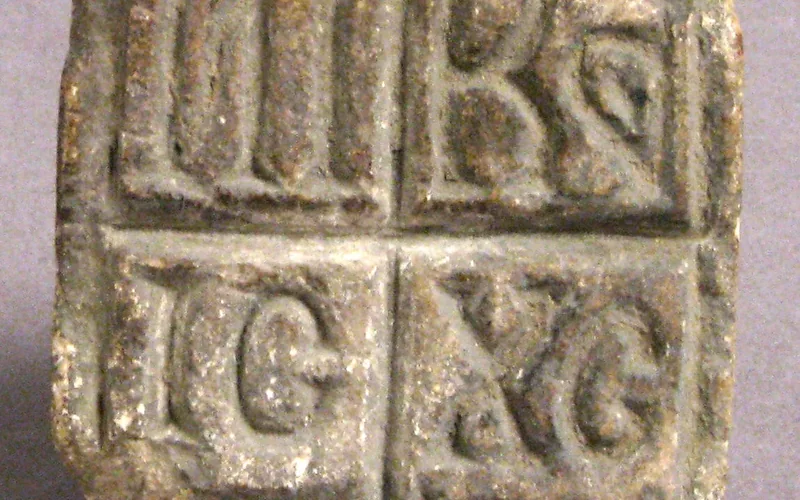
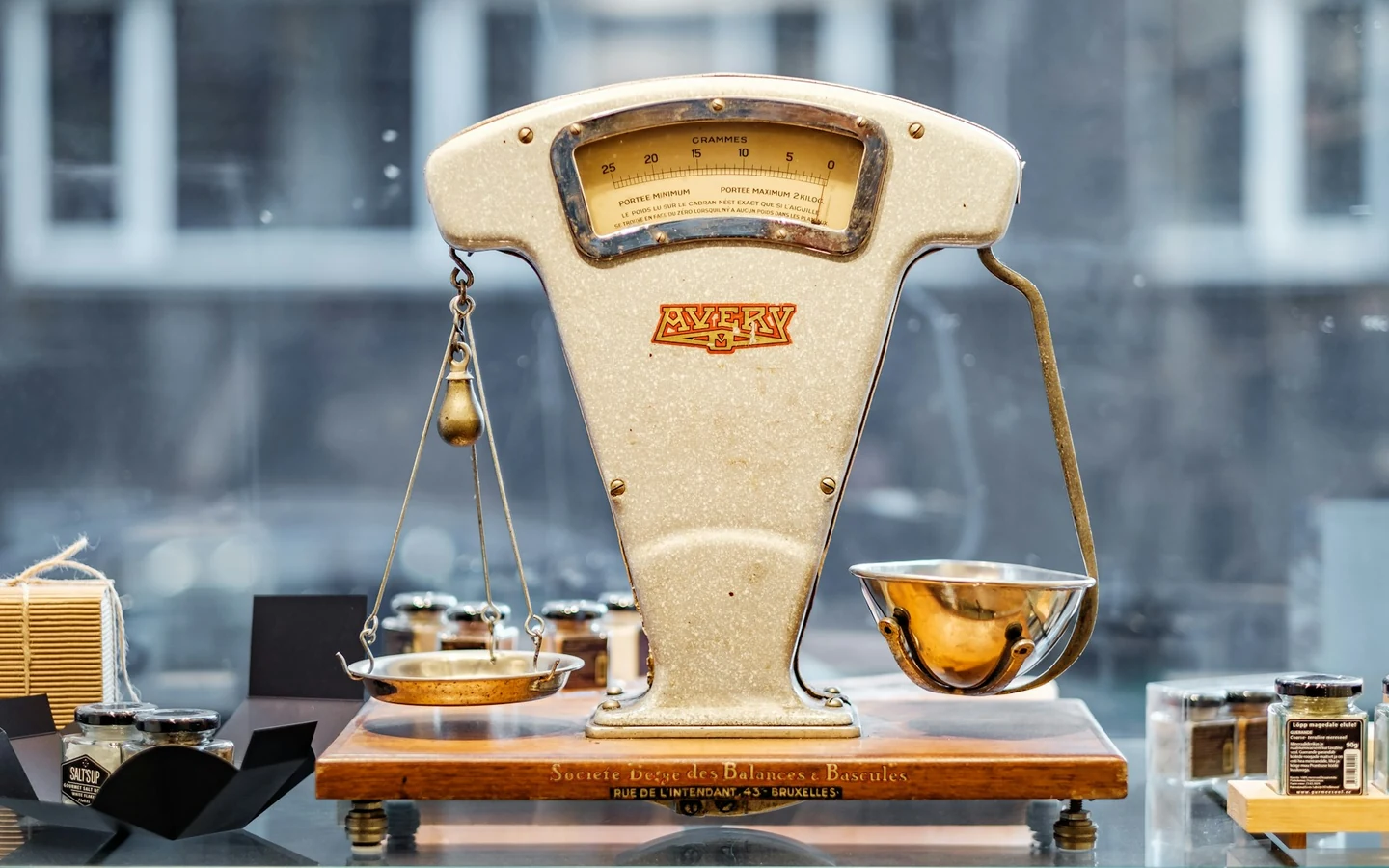
The assize is the earliest large-scale attempt in English law to regulate a staple food by specification rather than by price, and its instrument was a weight. The steelyards for weighing loaves that survive in museum collections are the enforcement end of the same system.
Between the tables and the scales, it is possible to reconstruct how the thing worked without ever reading the statute. That is a reasonable outcome for a subject where the paperwork of enforcement has outlasted easy access to the law it enforced.