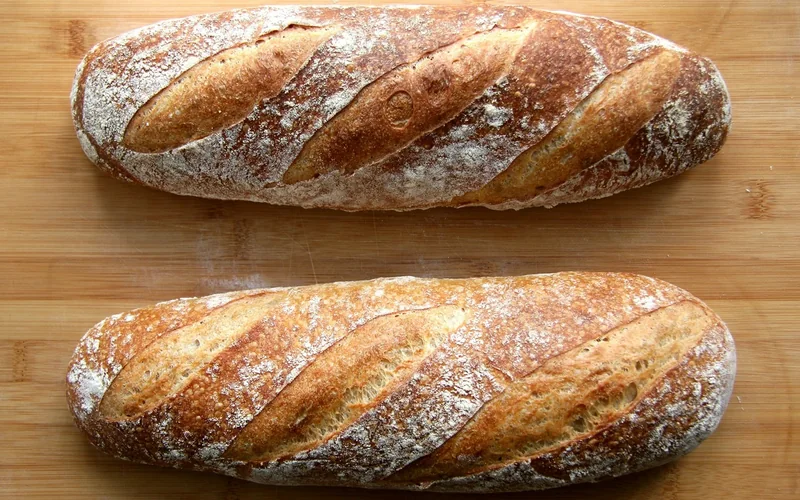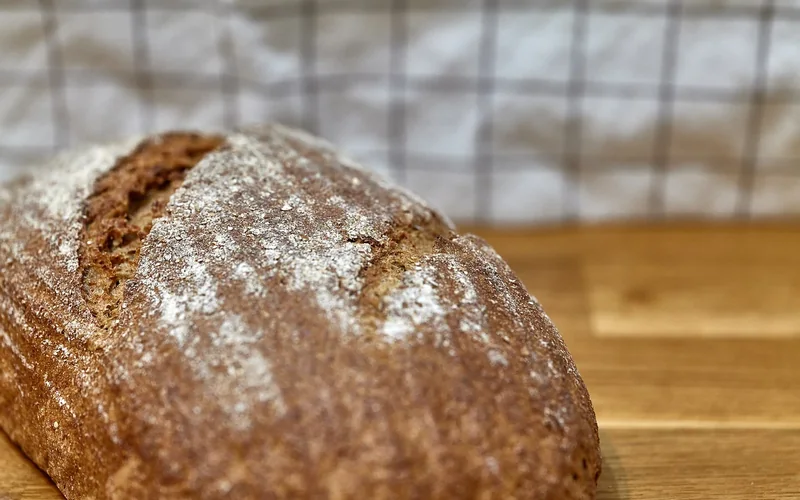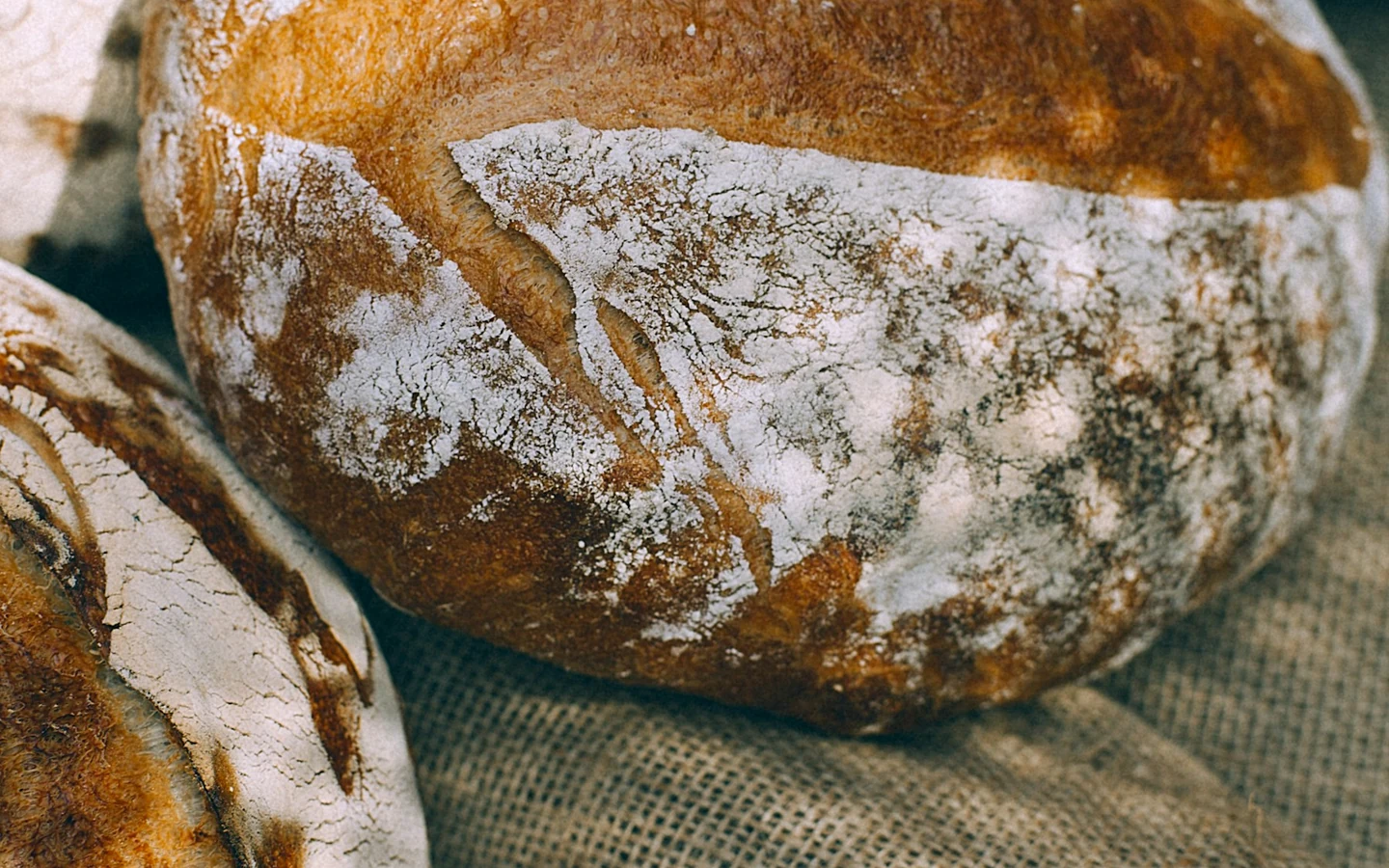
Ask for a country loaf in France and you will be handed something with a floury crust, a slightly grey crumb, and a faint sourness. Ask what makes it a country loaf and the answer becomes surprisingly soft. France regulates bread names more tightly than most countries, with thresholds written into a government decree, yet pain de campagne is not one of the names it fixes. Understanding what the law does cover is the fastest way to read a French bakery counter accurately.
What the 1993 bread decree actually covers
The governing text is Décret n° 93-1074 of 13 September 1993, published in the Journal Officiel the following day under the reference ECOC9300130D. It was issued to apply a much older statute, the law of 1 August 1905 on fraud in the sale of goods, to specific categories of bread. Its scope is narrow and deliberate: rather than describing every loaf on sale, it attaches conditions to a handful of names that had become commercially valuable.
Article 1 handles the phrase pain maison. A baker may only use it, or an equivalent wording, when kneading, shaping, and baking all take place at the point of sale to the final consumer. The same operator may also sell such bread from a mobile stall, provided those three operations happened in that single establishment. Nothing about the recipe is specified. The claim is about where the work was done.
Article 2 is the substantive one. It sets out the conditions for pain de tradition française, along with the permitted variants pain traditionnel français and pain traditionnel de France. Whatever the shape of the loaf, it must not have been frozen at any point during production, and it must contain no additive at all. The dough may be made exclusively from bread-making wheat flour, drinking water, and food-grade salt. It is fermented with baker's yeast, with levain, or with both.
The three permitted extras
The decree then names a short list of optional additions, expressed as a percentage of the total weight of flour used: up to two per cent broad bean flour, up to half a per cent soya flour, and up to three tenths of a per cent wheat malt flour. These are processing aids in practical terms, affecting dough handling, crust colour, and enzyme activity. The list is closed. Anything beyond it, including the ascorbic acid and emulsifiers common in industrial baking, takes the loaf outside the protected name.
Why pain de campagne is missing
Read the decree from beginning to end and the phrase pain de campagne does not appear. There is no legal recipe, no minimum rye content, no required fermentation method, and no restriction on additives attached to that name specifically. A country loaf sold in France sits under general food labelling and fraud rules, not under a dedicated definition.
This is easy to misread as a loophole. It is closer to a historical accident of what the trade asked to have protected. The 1993 decree also repealed the second article of a 1963 text on flour composition and the 1967 definition of pain de consommation courante, tidying up an older regulatory layer while leaving regional and descriptive names alone. Names describing a style were left to the market; names implying a method or a place of production were the ones written down.
In practice, most bakers use pain de campagne to signal a loaf with some proportion of rye or higher-extraction wheat flour and a longer, partly soured fermentation. Some use it for a loaf that is neither. Both are legal. The name tells you about intent and appearance, not about process.
The levain rules a country loaf may or may not meet
Where the decree becomes genuinely precise is the phrase au levain. Article 3 restricts that wording to breads meeting the Article 1 or Article 2 conditions and, on top of that, two measured limits: a maximum pH of 4.3, and at least 900 parts per million of endogenous acetic acid in the crumb. That second figure is unusual in food law. It is a chemical fingerprint of a genuinely soured fermentation rather than a claim about ingredients.
Article 4 then defines levain itself. It is a dough made from wheat flour, rye flour, or both, with drinking water and optional salt, put through a natural acidifying fermentation and carrying a microbial population dominated by lactic acid bacteria and yeasts. Its function is stated as making the dough rise. Crucially, the article permits baker's yeast to be added at the final mixing stage, capped at two tenths of a per cent of the flour weight introduced at that stage. A dried levain is also allowed, provided each gram carries roughly a billion food-grade bacteria and between one and ten million yeasts, and provided it still raises dough normally after rehydration.
So a country loaf that carries au levain on its label is making a testable claim. A country loaf without that wording may still be fermented with a starter, but nothing measurable has been asserted.
What the shop sign guarantees
One further layer sits above the bread itself. According to the Confédération Nationale de la Boulangerie-Pâtisserie Française, the trade body that pushed for it, a law of 25 May 1998 restricted the words boulanger and boulangerie, adding three articles to the consumer code. The operative one, originally numbered L121-80 and renumbered L122-17 by an ordinance of 14 March 2016, prevents a business from using either term at the point of sale, or in consumer-facing advertising, unless it carries out kneading, fermentation, shaping, and baking itself on those premises, starting from ingredients it has selected. The same article states that the dough and the bread must not be frozen or deep-frozen at any stage of production or sale.
Before that law, the word could appear equally on a shop that baked and a shop that only resold. The stated purpose was fair competition and consumer information, which is why it landed in consumer law rather than commercial law.
Reading a country loaf honestly
Put the layers together and a useful hierarchy emerges. The sign tells you whether the bread was made on site. The phrase pain de tradition française tells you the additive and freezing rules were followed. The phrase au levain tells you the crumb would pass two laboratory thresholds. The phrase pain de campagne tells you what the baker thinks the loaf resembles.
None of this makes an unregulated country loaf worse. Plenty of excellent bread is sold under names the state has never touched, and plenty of dull bread meets every threshold. But it does mean the informative questions at the counter are about flour and fermentation rather than about the name. Which flours, at what proportion. Whether there is a starter, and how long the dough sat. Those answers are not written on the label, because for this particular loaf the law never asked for them.